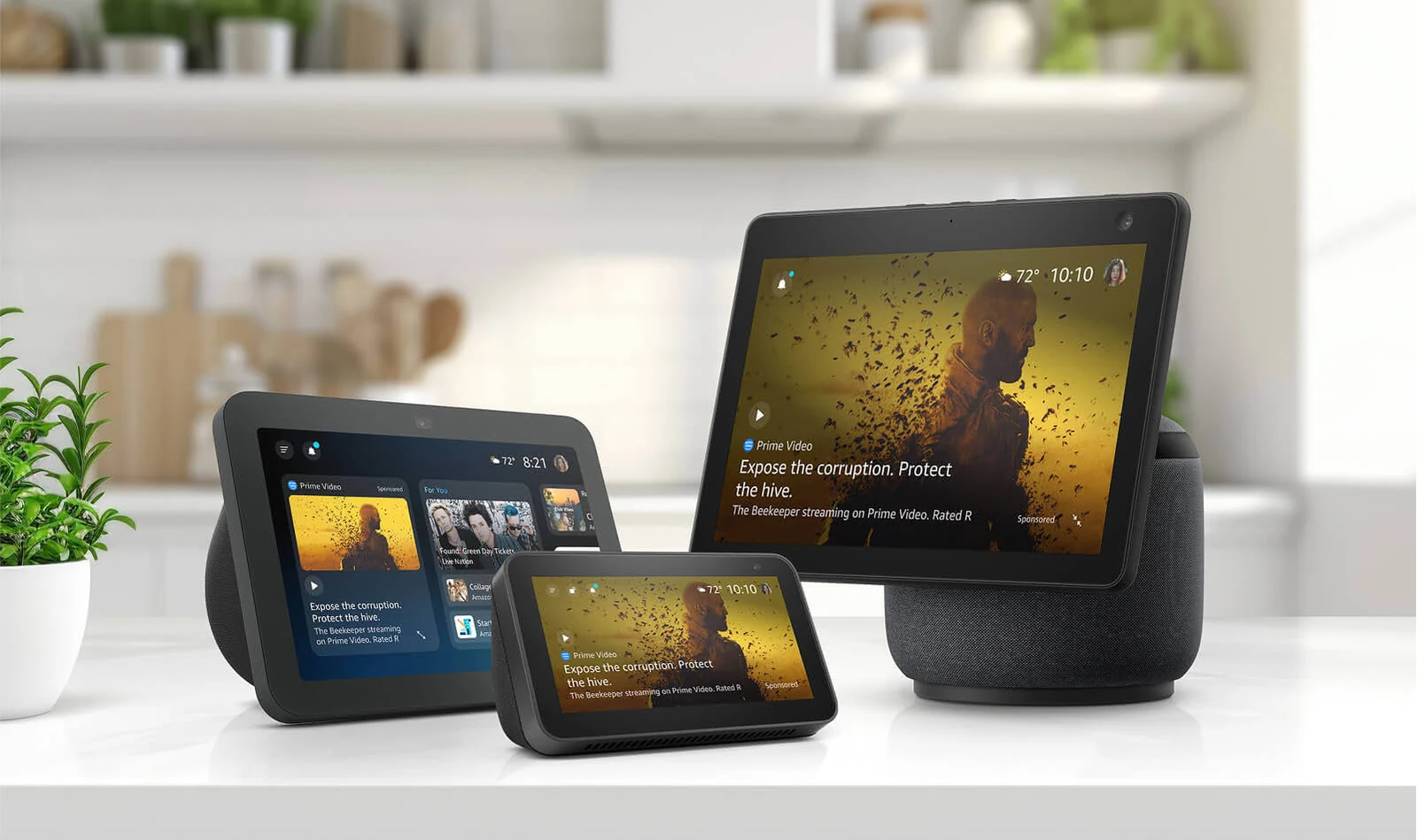
Amazon’s CEO wanted advertising on Alexa, a device family that has since passed 500 million sold, so it could compete for the dollars flowing to radio and podcasts. There was no playbook for what an ad should be when the interface is a voice in your kitchen, and I was tasked with defining it end to end: the principles, the full range of ad formats from full-screen to voice-only, and the first brand vertical to launch it. The sponsored experiences Amazon runs publicly on Alexa today follow the blueprint we set.

The ask
Amazon’s CEO wanted Alexa to compete for the ad dollars going to radio and podcasts. It was a design problem before it was a sales problem: no one could define what an ad on Alexa should be. Radio earns by interrupting; Alexa exists to help someone finish a task. I set the standard before any format existed: an ad had to feel native to Alexa, or it wouldn’t run.

Alexa already answered with music, timers, and the weather. Advertising had to join that stream without breaking the voice people trusted.
The stakes
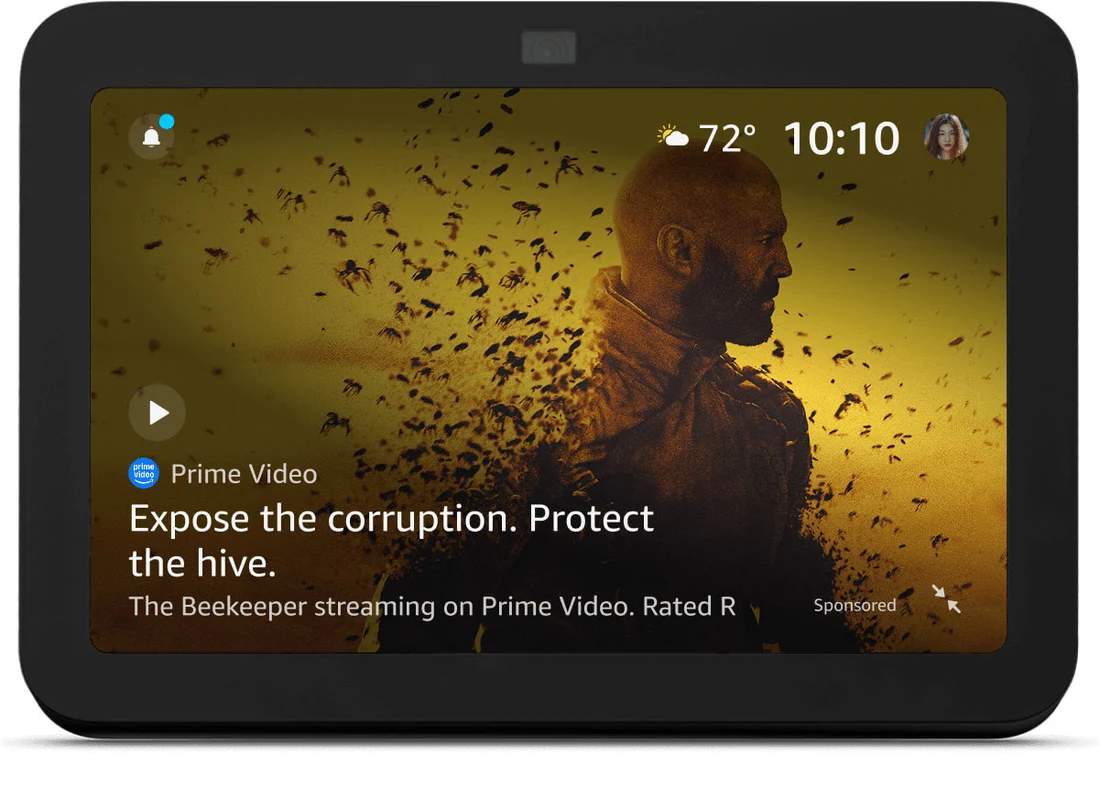
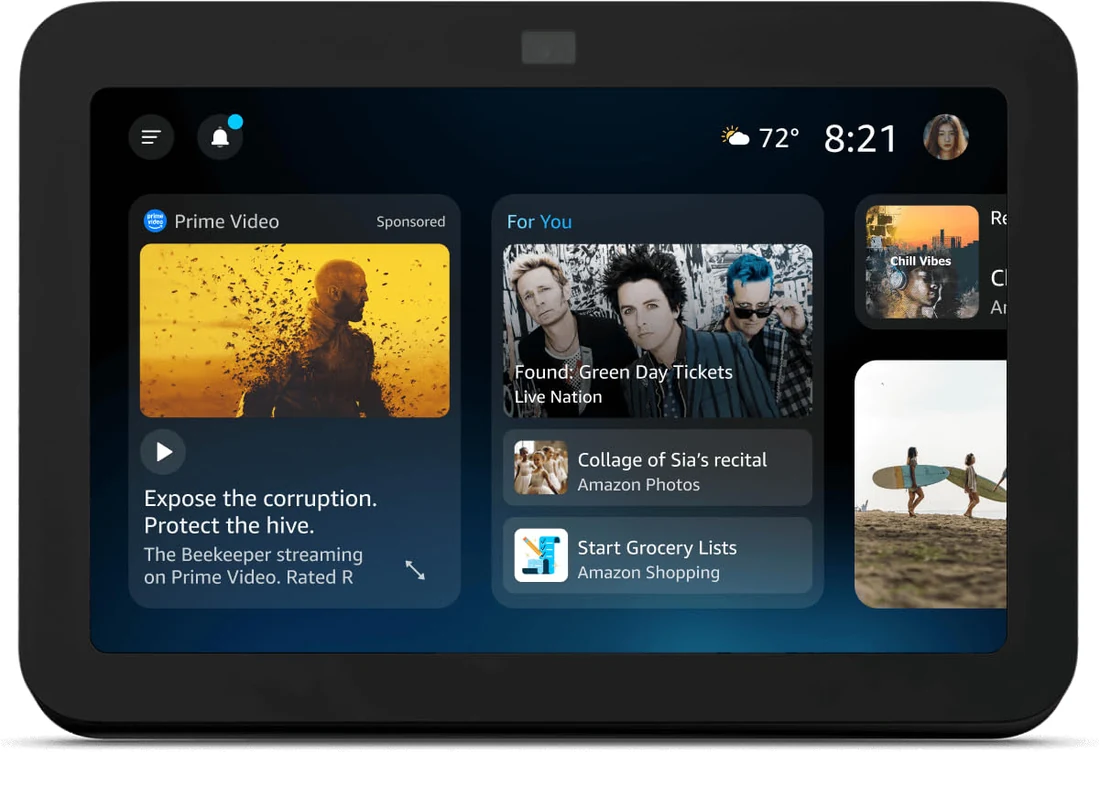
Alexa is ambient and lives in the home. People bought it for utility, and unlike a feed there is no scroll-past or close-tab. The same screen is also read at different distances: a glance from across the kitchen one moment, a touch up close the next. How far away someone is standing changes what an ad can be. That was my finding during the design cycle: no single call-to-action layout worked at both distances, so every screen ad got two states.
I recognized that one screen had to be two ads: the detail you read up close disappears from across the room, so every format shipped in a near state and a far state.


Voice also removes advertising’s usual safety nets: no small print, no visual line between editorial and sponsored, just one voice people had learned to trust. Every format decision started from protecting that credibility.
The rulebook
Four principles governed every format, and the first one was restraint. They set what an ad could and couldn’t do on the platform before a single format existed.
The hardest of these was the boundary between Alexa recommending, staying neutral, and saying sponsored. Blur those and the assistant loses the credibility advertisers were paying for, so I built the boundaries into the format rules rather than leaving them to judgment calls.
I pushed back on mid-roll ads for Alexa: skills and podcasts already carried their own, and stacking ours on top would spend the platform’s trust for a format no one needed.
The formats
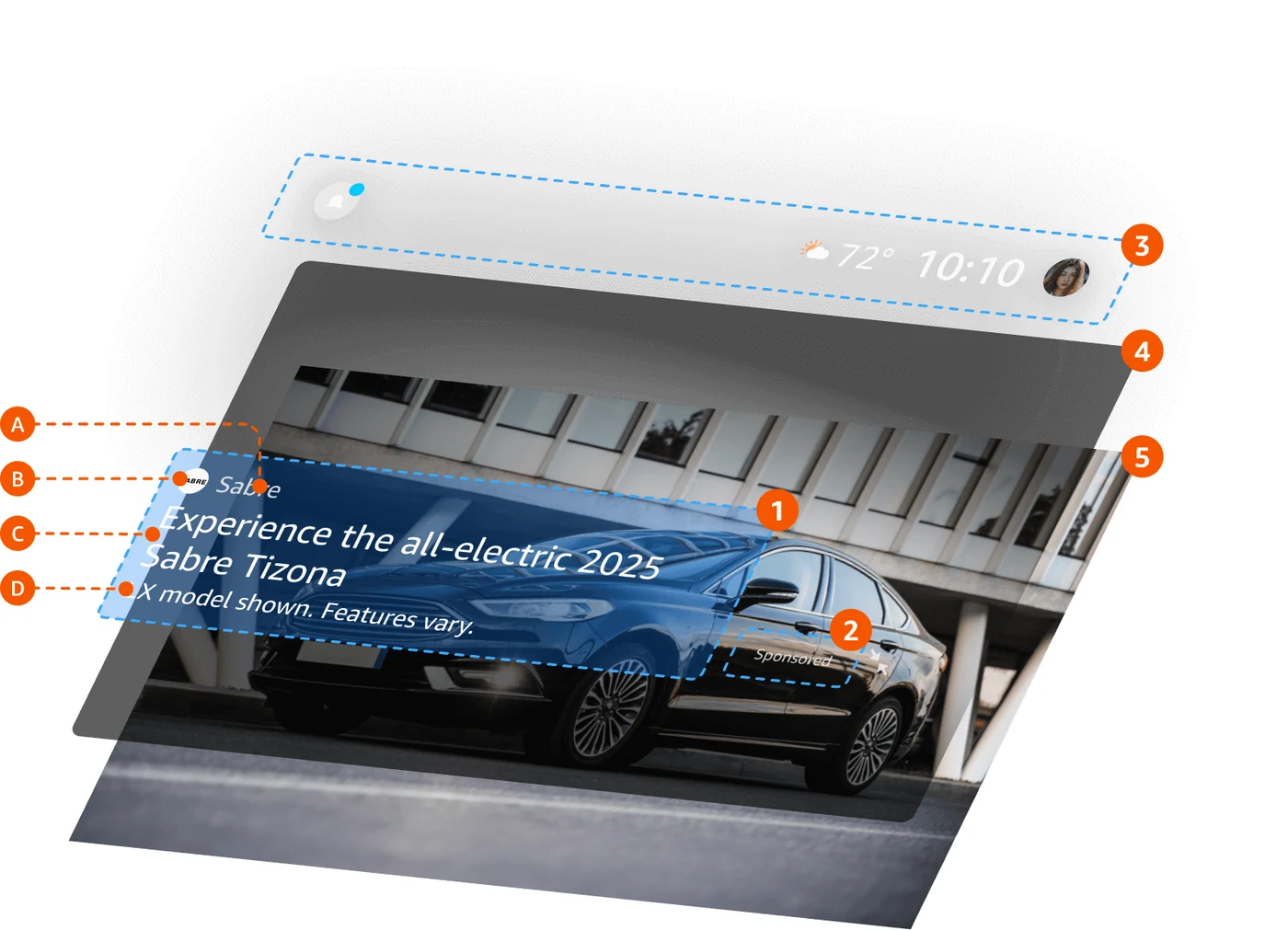
The brief was the entire solution, not a single format. I mapped the space from full-screen brand experiences to sponsored placements woven into conversational discovery, and decided what belonged on a device people trusted and what didn’t. The formats had to span Amazon’s full hardware range, from Echo Show screens that could carry a visual ad to voice-only speakers where an ad is only words and timing. Every ad was built from the same fixed parts, a logo, a headline, an image, a Sponsored label, and a written disclosure, so sponsored could never hide and a brand knew exactly what it was buying. I set the kit and the standard every part had to hit, then led two designers building formats against it, staying close enough to the pixels to weigh craft against usability myself. A core decision: never force a response in the moment. A call to action handed the thread to video or the phone, where someone could act on their own time instead of negotiating with a speaker mid-task.
I made disclosure a fixed component of every ad, never optional, so a sponsor could never blur into Alexa’s own voice.

The vertical
The default expectation was to sell sponsored Amazon products first. I pushed for entertainment, trailers and reminders for shows and movies, because on a device people already used to play media an entertainment ad reads as content rather than interruption. I took that case to Amazon’s CEO, and partnered with the new ads organization to prove it, shaping the formats, sales materials, and client strategy and testing the model with real Prime Video titles.
Leadership wanted to sell products first. I argued for entertainment, and that’s the vertical Alexa ads launched with.
The lineage
Ads on Alexa are live today. Sponsored tiles and conversational entertainment ads run openly on Alexa devices, and they arrived entertainment-first. Amazon’s public ad specs document the same system my team defined: component-based home-screen formats, experiences that adapt to viewing distance, and calls to action that hand off to video and the web. Amazon now runs buy-in-the-moment conversational ads too, where someone completes a purchase without leaving the conversation. I concepted that in 2019, mapping conversational purchasing end to end with voice prototypes and presenting it up to leadership.