I led design for Alexa's app store for five years, growing it from a 5,000-skill catalog into a true ecosystem: conventions customers could understand, a conversational way to discover skills by voice, and an economy that gave developers a reason to build. It reached more than 130,000 skills and earned a patent.

The brief
The storefront existed, but it borrowed the conventions of retail: product pages for things that were not products. Customers had no mental model for what a skill was, how to install one, invoke one, or manage the ones they had. And underneath sat the real problem: skills were invisible. No shelf, no icon on a home screen, out of sight the moment the browser closed.
It also meant the work was never really one project. One problem ran through all of it for five years, and each piece set up the next: give the store a model customers could understand, move discovery out of the store and into conversation, extend it to new surfaces, and build the economy that made a skill worth a developer's time.
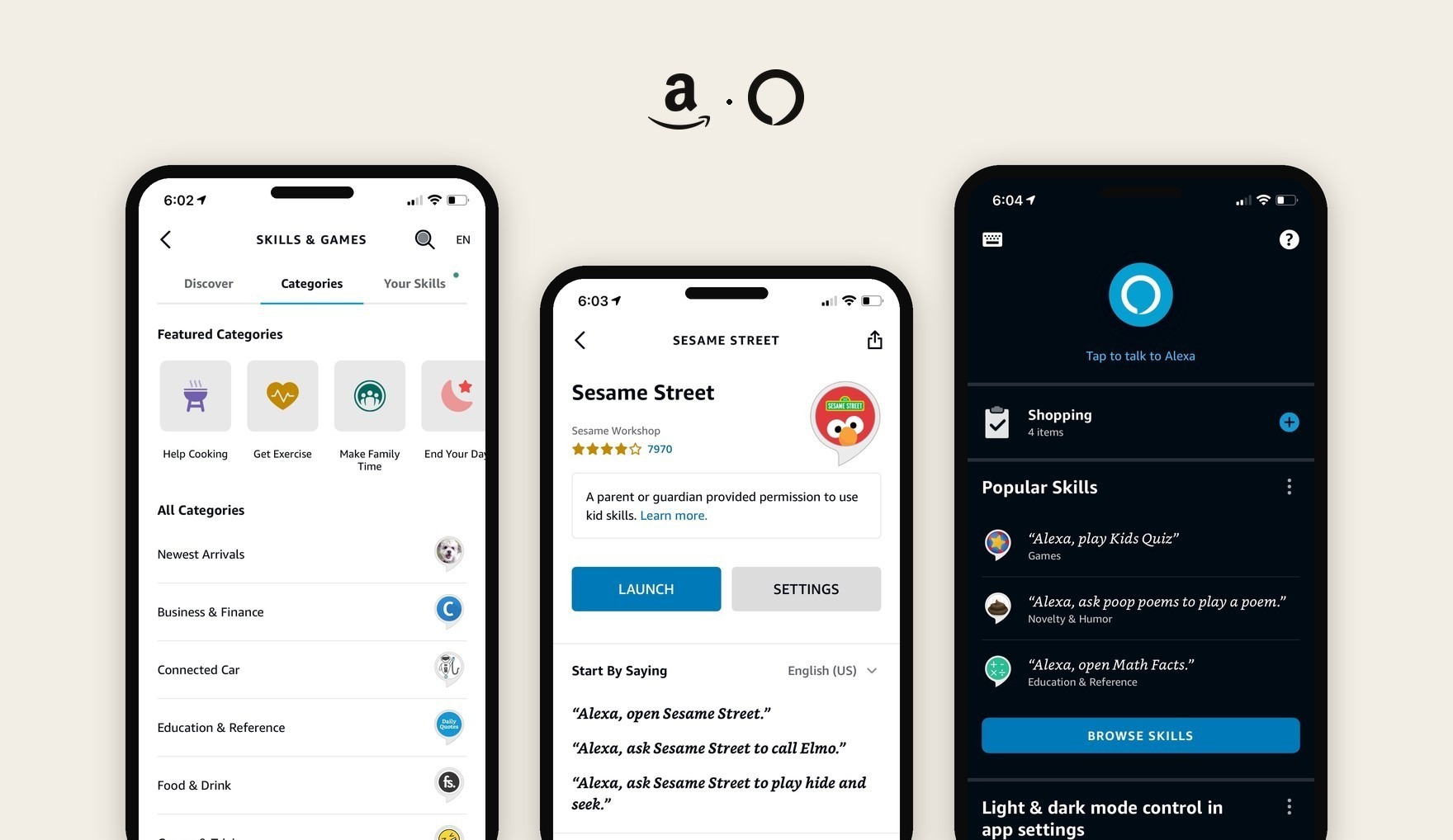
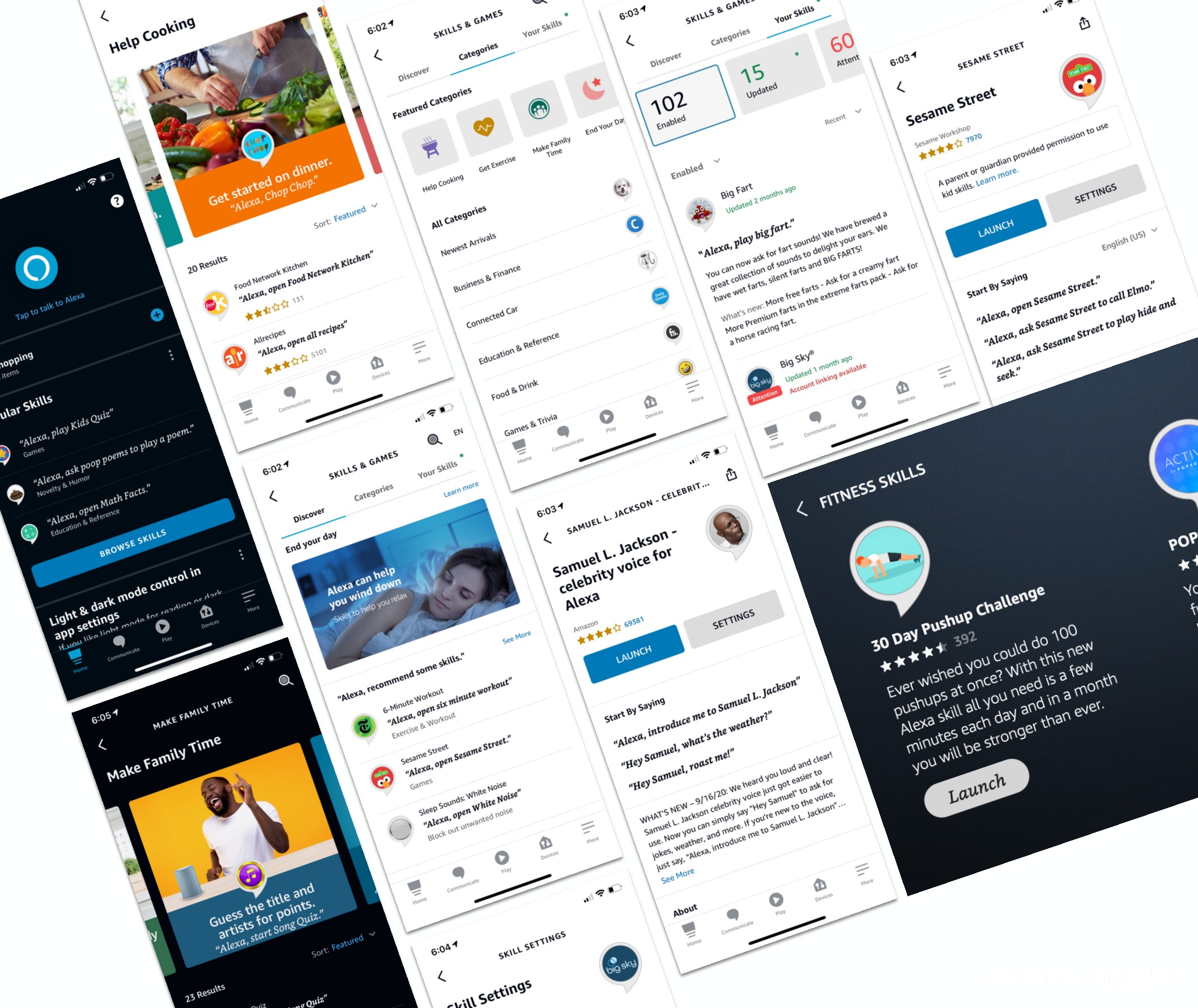
From retail pages to an app store: find, install, invoke, manage.
Skill suggestions inside natural conversation, beyond the store.
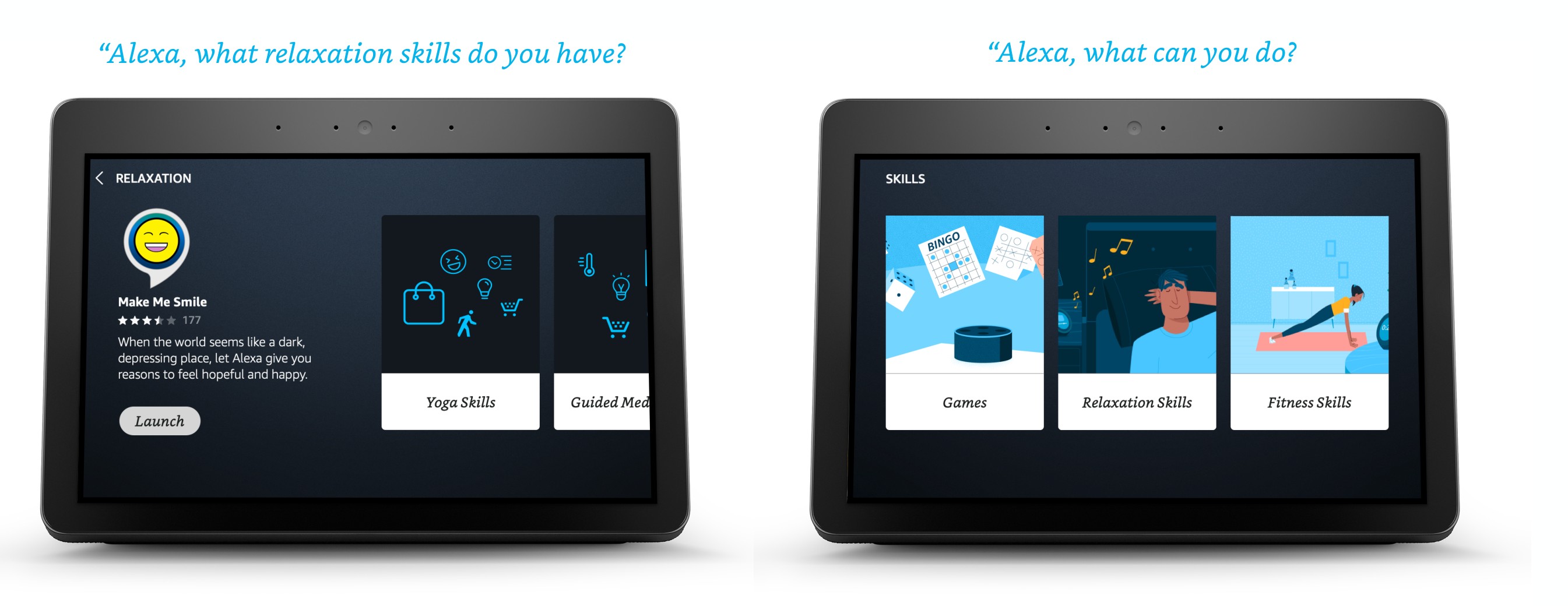
The store extended to screened devices, voice and visuals together.
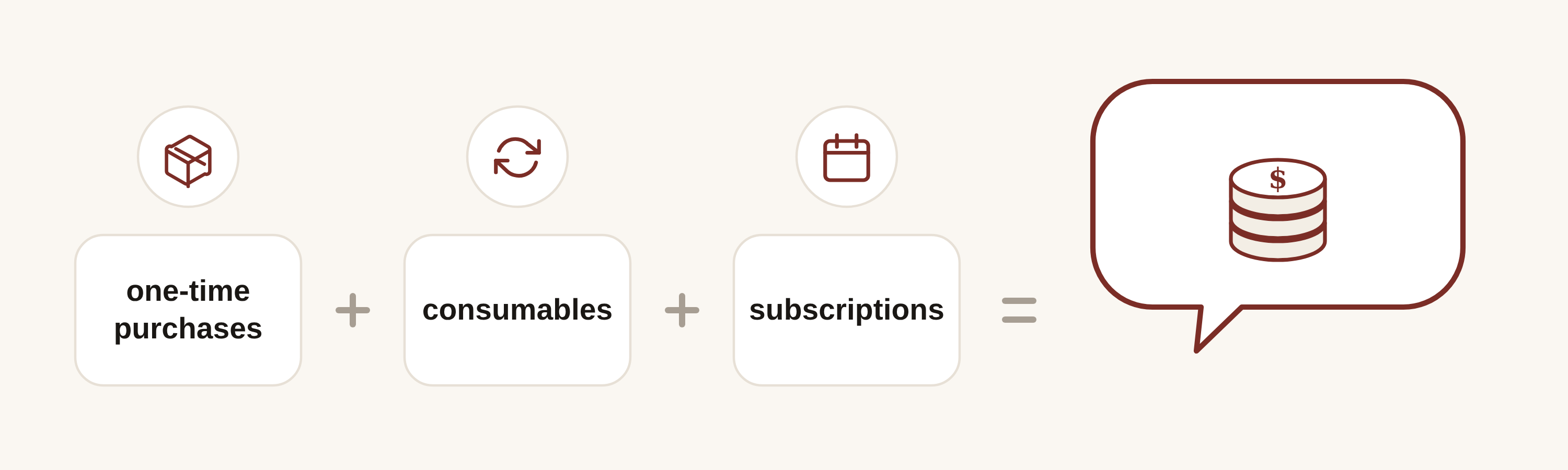
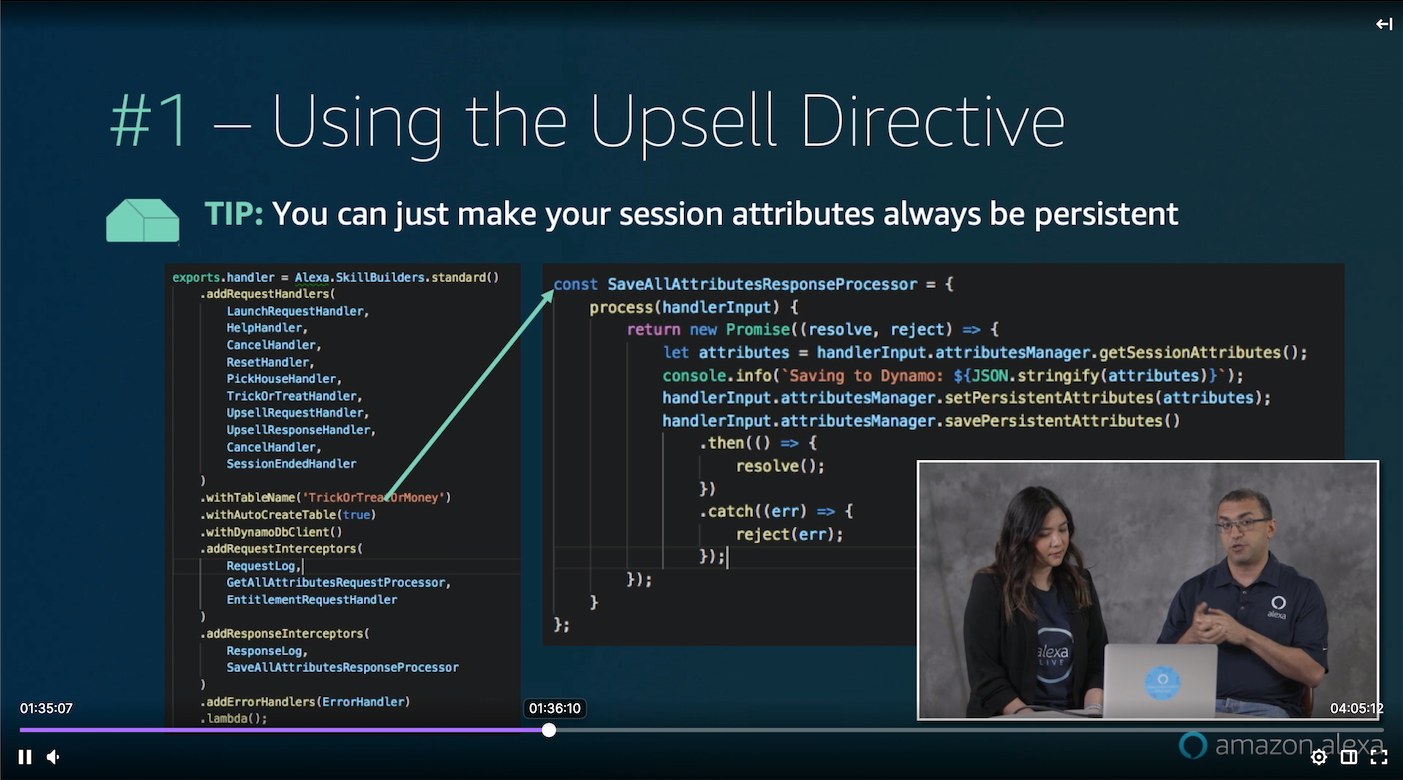
In-skill purchasing, subscriptions, and a developer education program.
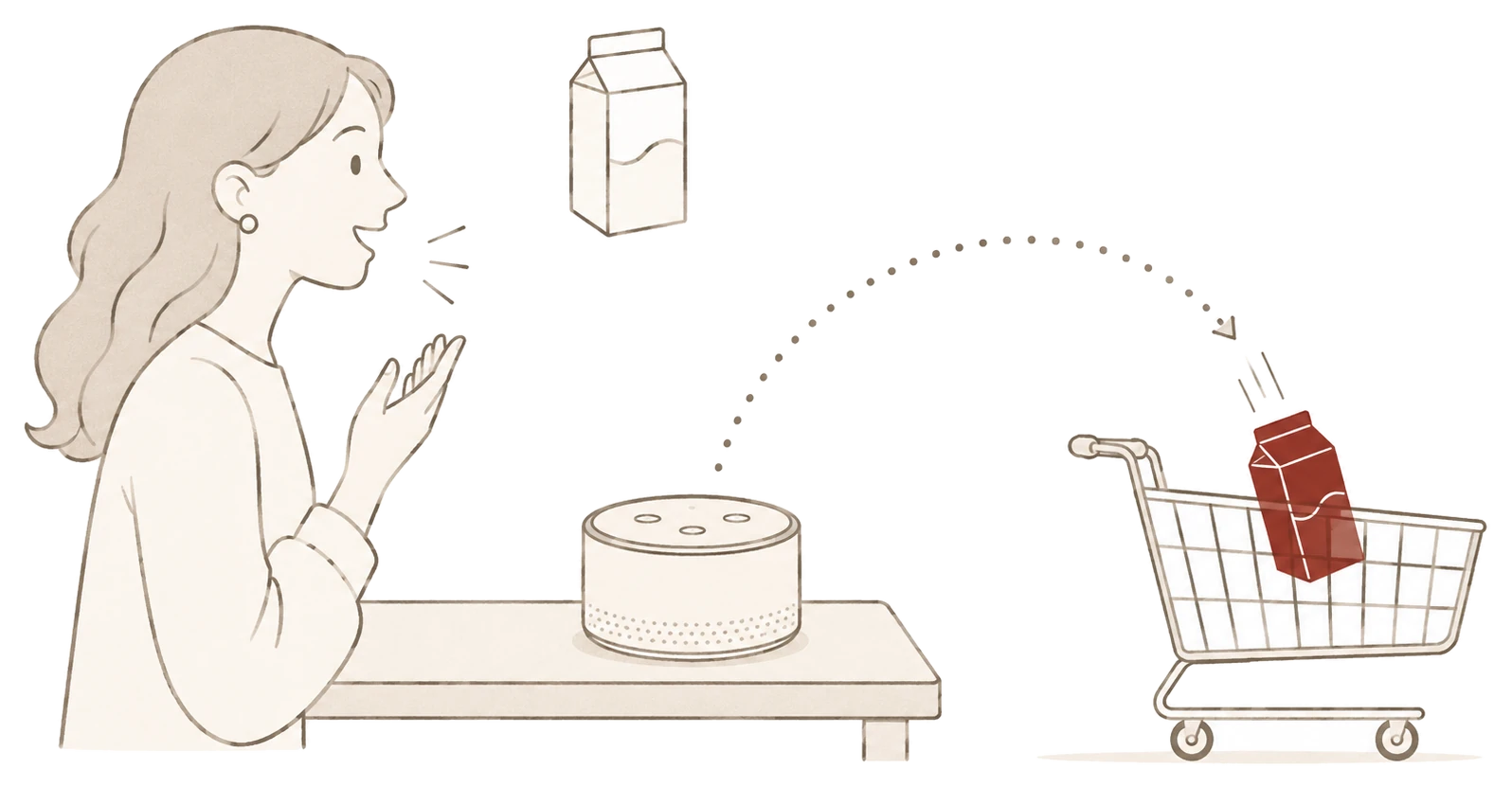
The conversational discovery model, applied to shopping Amazon by voice.
The problem was never the catalog. A skill no one could see might as well not exist, so every piece of the work pointed the same way: make skills visible in the store, in conversation, and in a developer's business.
Chapter 01 · The model
The first job was the mental model. I helped adapt the retail skeleton into a digital store: conventions for how a customer finds a skill, understands what it does, installs it, invokes it, and manages the ones they own. Small decisions carried the weight, like what a skill's detail page owes a customer that a product page does not, and what “enabling” something with no icon should feel like. With the model in place, a device stopped being a speaker with hidden features and started being something you could actually stock.
Chapter 02 · Discovery
A store you have to remember to visit cannot fix an invisibility problem, so discovery had to move into conversation itself. I designed the system that suggests skills during natural use of Alexa, built on a simple insight: customers think in themes. Nobody asks for a skill by its catalog name; they ask for relaxation, a game for the car, something for the kids. I designed a conversational template flexible enough to fit any skill, rebuilt the tagging system underneath so the catalog could answer thematic questions, and wrote the pattern's best practices.
Customer“Alexa, let's play a game.”
Alexa“Sure, I love games! A popular one this week is Jeopardy. Wanna try it or pick a game category?”
Customer“Umm… let's pick a category.”
Alexa“Okay, I've got word games, adventure games or music trivia. Would you like any of those?”
Customer“Let's try music.”
Alexa“Great, music games. I have a popular one called Song Quiz that's rated 4.8 stars. Wanna try it?”
Discovery conversion rose from 50% to 72%. The pattern was shared at the Alexa all-hands and the developer summit, other Alexa teams adopted it for their own surfaces, and the underlying model was granted US Patent 10,978,069. The principle outlasted the project: Alexa's own developer guidance later framed it plainly, that customers shouldn't have to remember a skill's name, with millions using skills every month without ever speaking an invocation name.
Chapter 03 · New surfaces
Screened devices changed what an answer could be. On the Echo Show and Fire TV, discovery became multimodal: voice carrying the conversation while the screen carried the evidence, skill suggestions you could see, compare, and try without breaking the exchange. The store's conventions had to hold across every surface a customer owned, from a voice-only speaker in the kitchen to the app in their pocket.

Chapter 04 · The economy
A store without an economy is just a catalog, and an app store only compounds when both sides have a reason to show up. Discovery gave developers feedback, customers finding and using their skills; monetization gave them a reason to act on it. I founded the monetization design team and stood up the strategy end to end: in-skill purchasing launched with one-time purchases, consumables, and subscriptions at a 70% revenue share, then premium content surfaces across app and device, and eventually paid skills. Developer revenue from in-skill purchasing more than doubled year over year.
The harder task was teaching a developer community how to build a business around a skill.
I became the program's educator and evangelist: developer guidance, best practices, and the public stage, including a chalk talk at AWS re:Invent on making money with in-skill purchases and developer sessions at Alexa Live.
Chapter 05 · Shopping
Once the conversational model was proven on skills, it became a foundation to extend, and its first new domain was shopping itself. The insight underneath it, that customers ask for what they want in their own words, is exactly how people shop out loud, so we carried conversational discovery into Amazon shopping on Alexa. A customer describes a product the way they would say it to a person, and the system reasons from that to the right item, suggests a reorder, and confirms the choice with no screen to fall back on. Voice shopping is less forgiving than a store: there is no grid to scan and no thumbnail to compare, so the pattern had to carry the judgment, narrowing to a few real options, asking the one question that actually decides it, and knowing when to just act. The store's founding principle held all the way into the cart: customers should not have to name the thing to find it.
The outcome
Over five years the catalog grew from 5,000 to more than 130,000 skills, serving over 900,000 developers, with the store's conventions holding across app, voice, and screen. The conversational discovery model earned US Patent 10,978,069 and became public Alexa guidance, and the monetization platform underneath became the foundation for Alexa's advertising business, which I went on to build. The work built more than a store: I hired and led the two design teams behind it, discovery and monetization, coaching a new voice designer into the craft along the way.