Creators was Facebook’s largest company strategy that year, and it grew faster than the system underneath it could keep up. I was tasked with revamping the professional experience end to end, from onboarding to daily management, for group admins, businesses, and content creators: unifying a sprawl of tools into one coherent system, and showing the unified system moved a company growth metric.

The problem
Creators run businesses, and Facebook’s professional tools are the back office they run them from. Across the ecosystem, many product teams were building those tools in parallel, so the same patterns were reinvented team by team, quality drifted from one surface to the next, and the experience became fragmented, inconsistent, and hard to navigate.
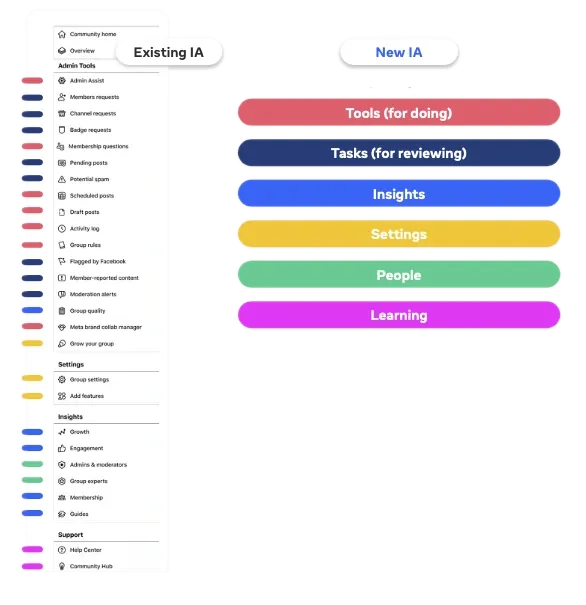
I had already begun untangling this inside Groups, remapping the admin tooling and navigation for community builders, and the same fragmentation faced every professional user who lives in a dashboard and moderates an audience. So I expanded the audit and the system to Facebook business Pages and content creators, regrouping a sprawling, duplicated navigation into six goal-based areas.

The bet
The bet had two parts. First, build one consistent system for every professional user: shared patterns, components, and standards, so someone moving between a Page, a Group, and Meta Business Suite never relearns the interface. Second, and harder, win adoption across the product teams building quickly into these surfaces. Platform work usually dies because it is the first thing deprioritized, and no one can force another team to use it. When the org committed to unification for Creators, I took on the platform directly and dedicated half my design team to it, so the system had a real owner as the surfaces kept shipping.

“She flipped a hesitant lead into a proactive champion for the unification work.”
Unified onboarding
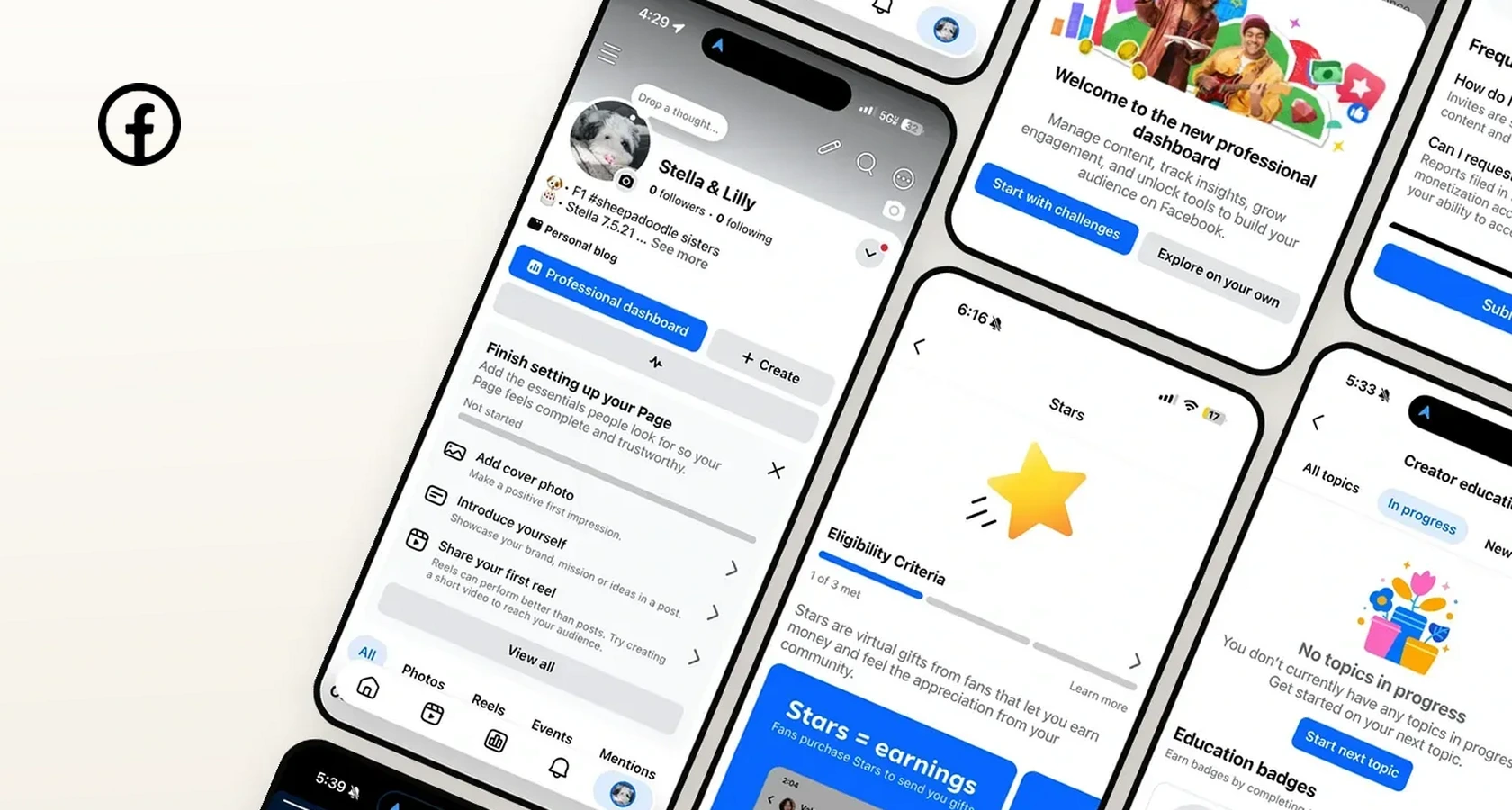
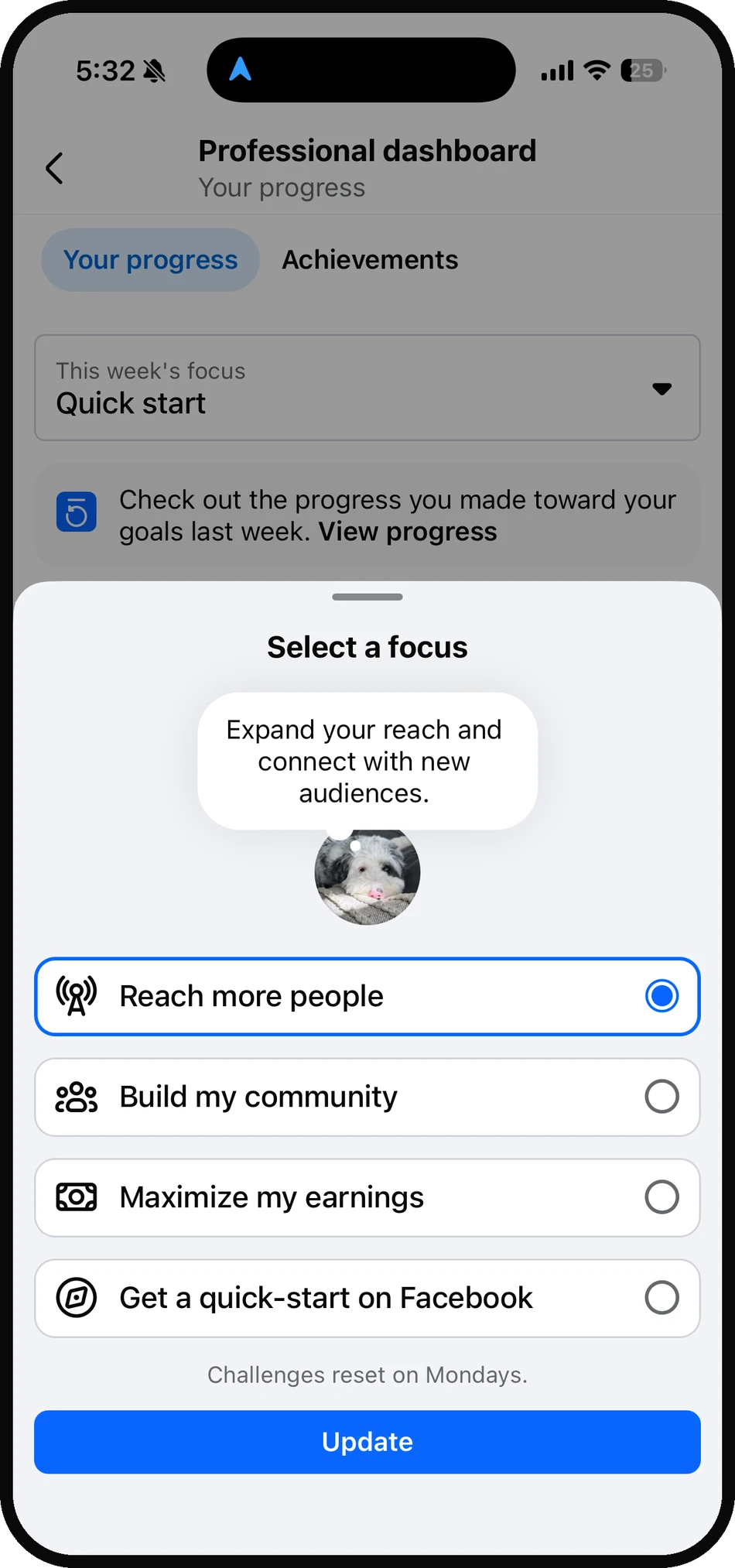
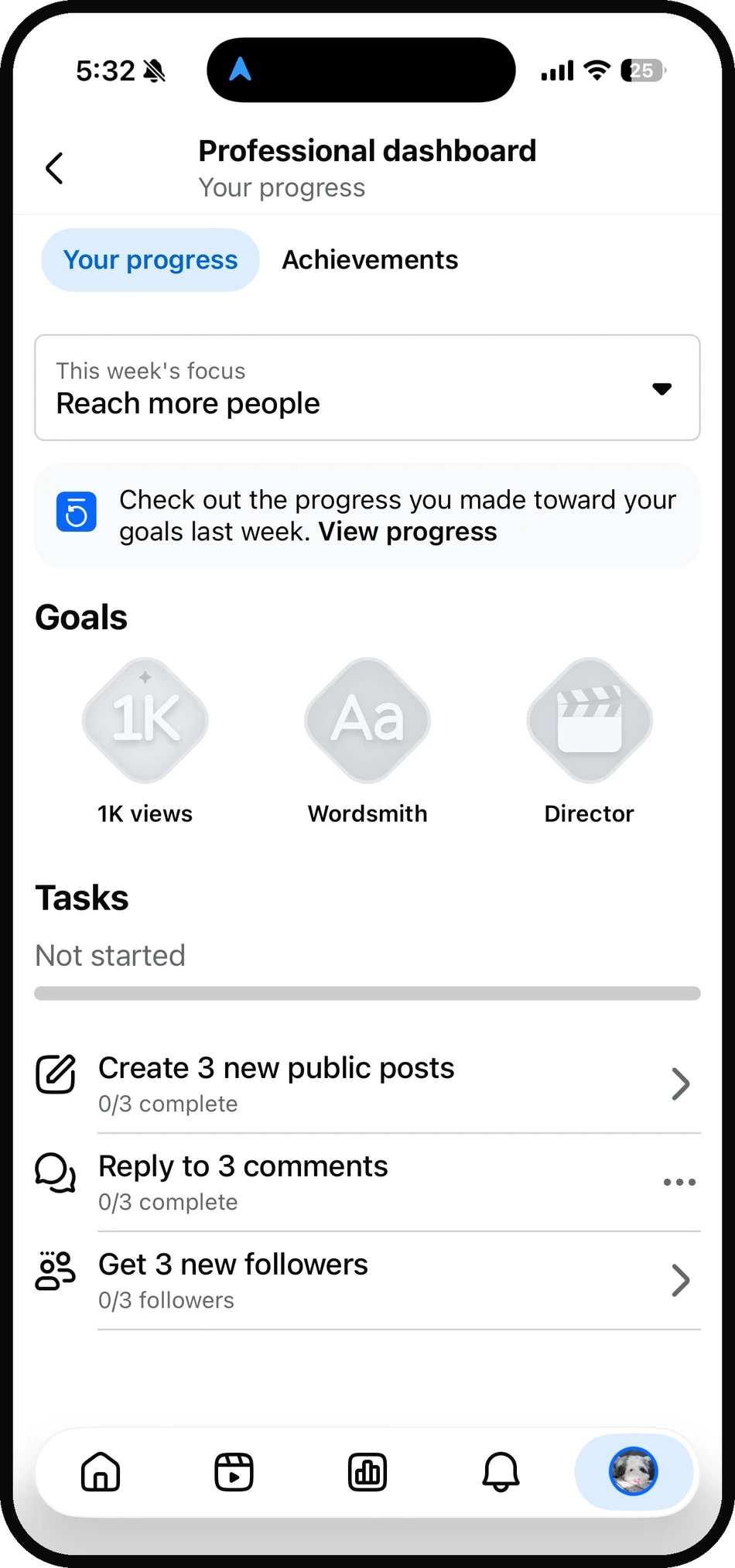
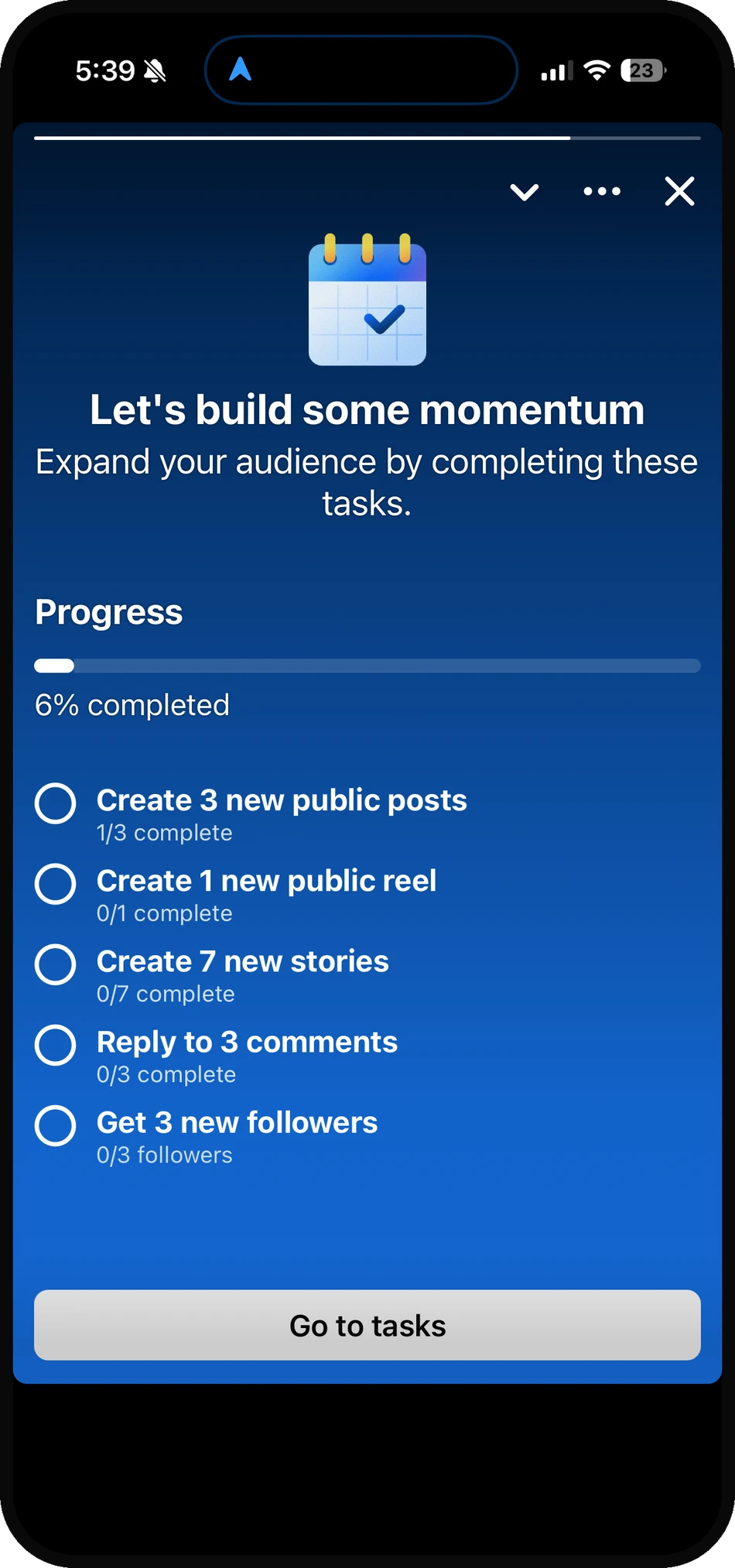
A business owner, an established creator, and a first-time homegrown creator each arrive with different goals, and each used to meet its own separate, redundant onboarding. My team consolidated those into a single flow that adapts to intent: a user picks a focus, the experience tailors weekly goals and tasks to it, and those same tasks echo throughout the product, so the goal a creator set stays in front of them wherever they go.


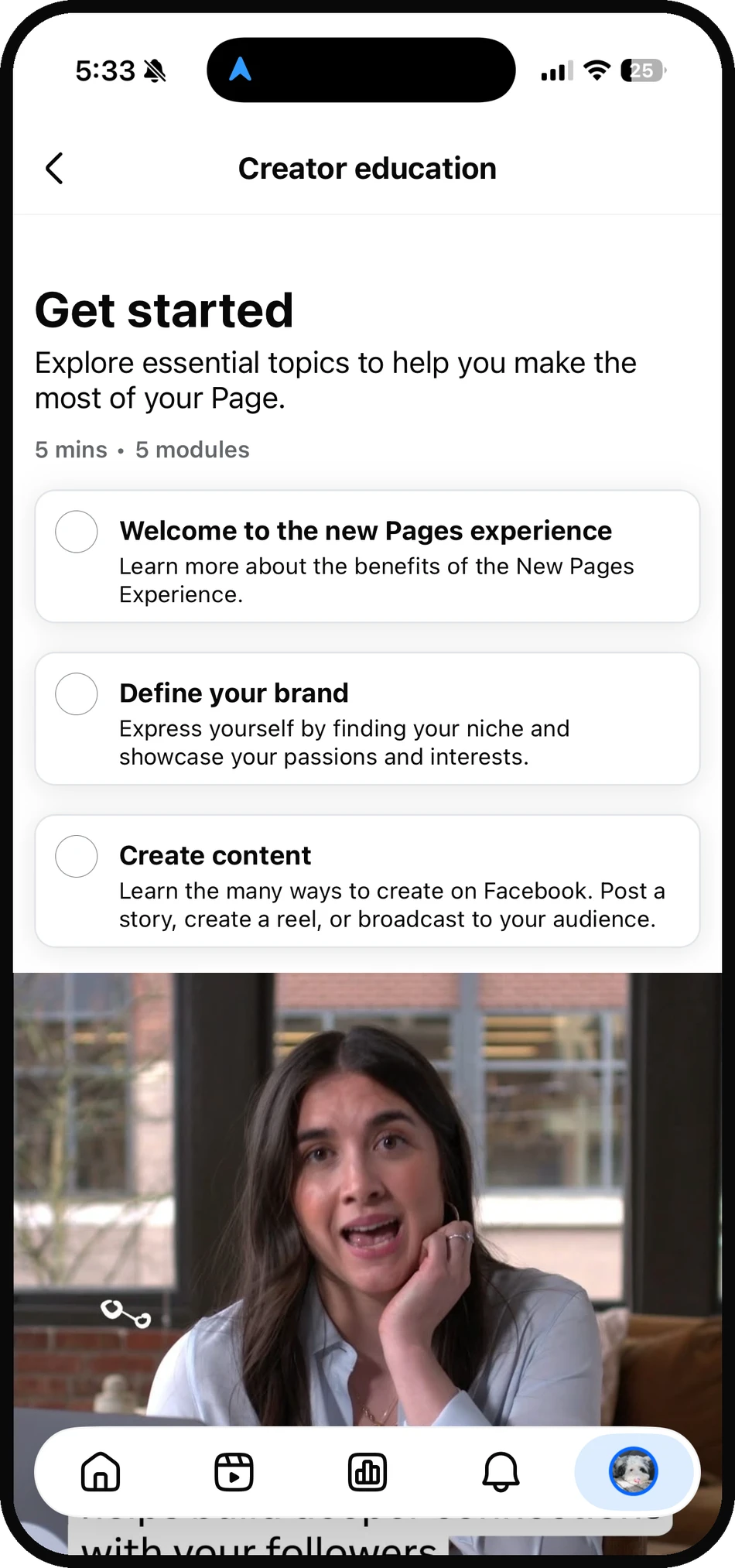
Unified education
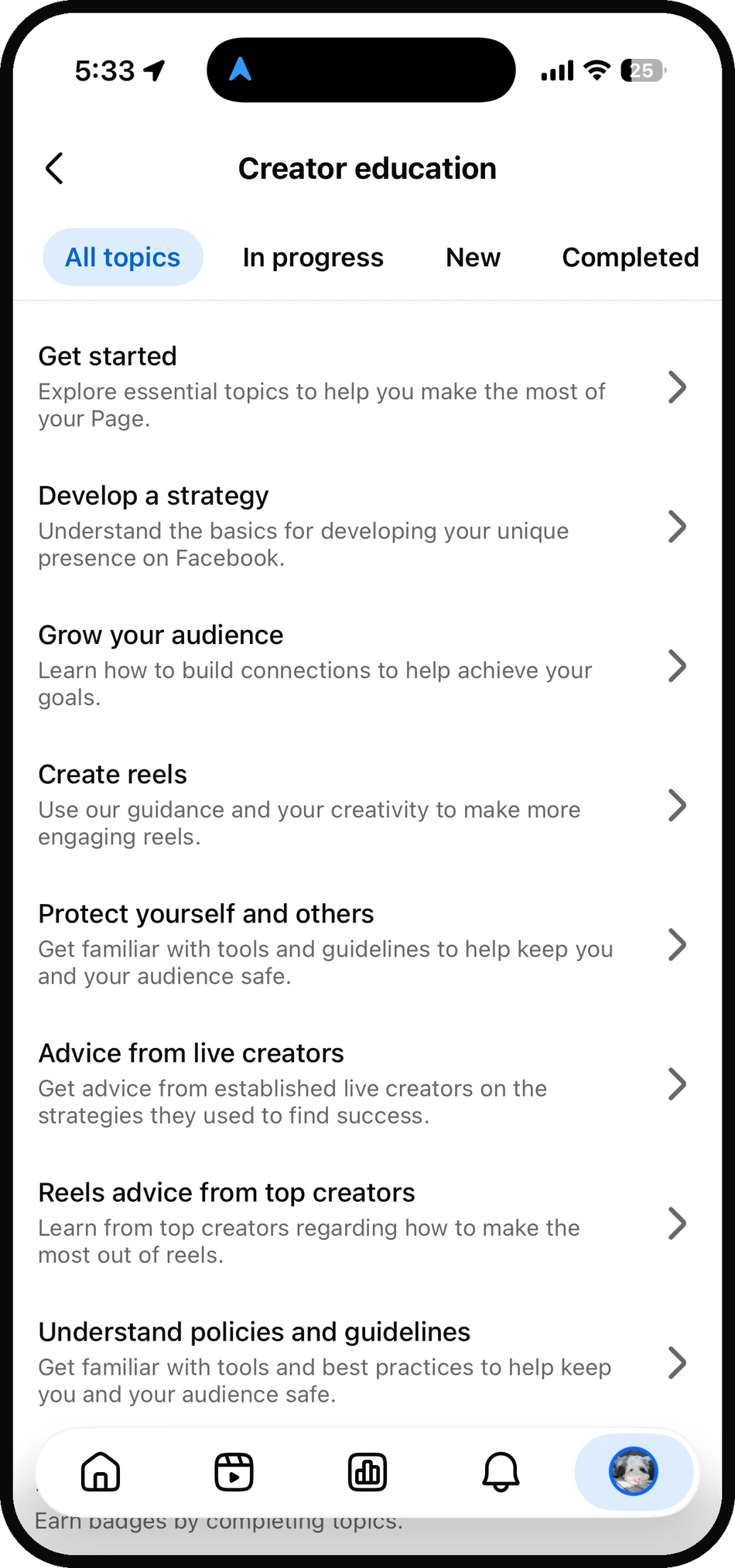
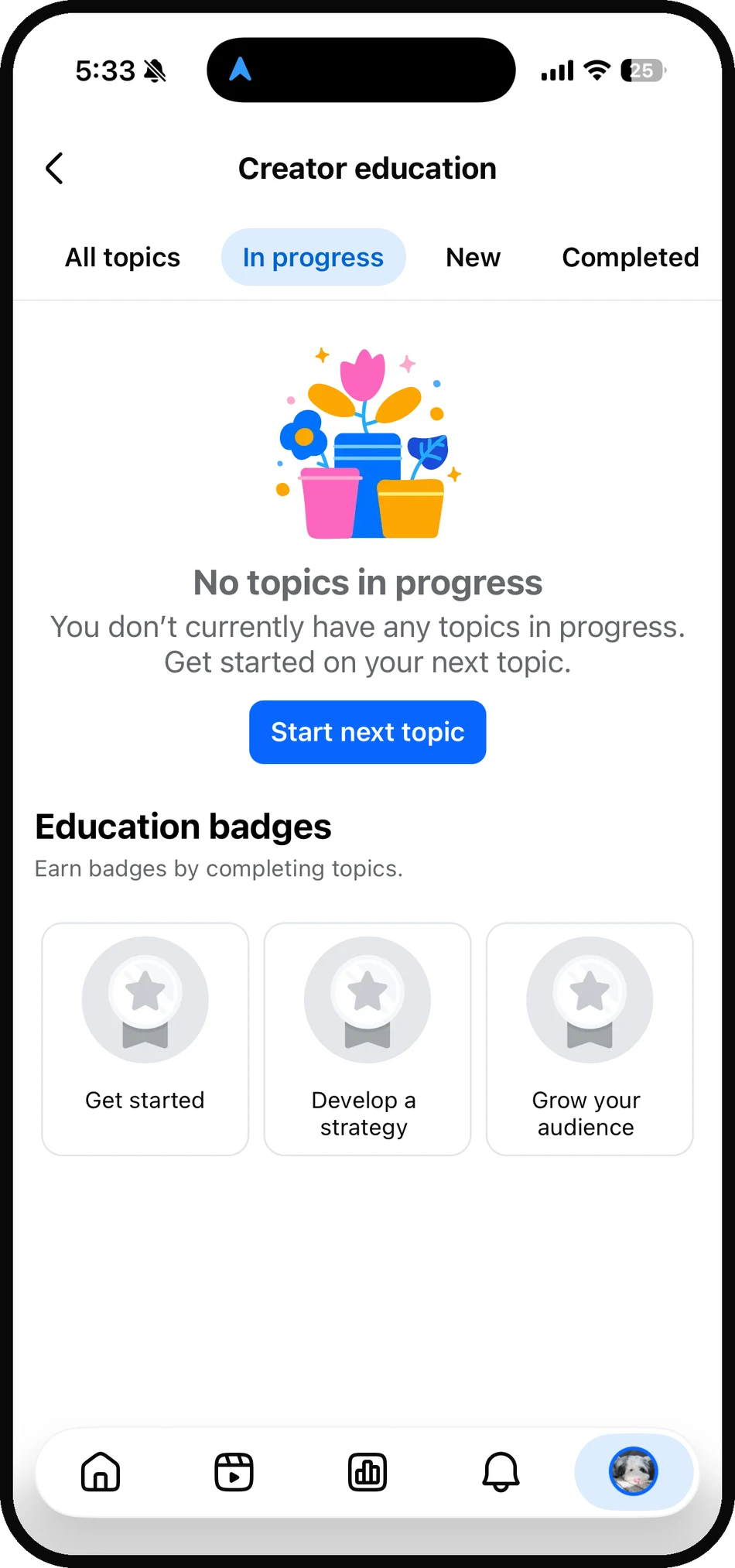
Guidance was scattered and duplicated across several teams’ features. Consolidating it into one experience was my bet: my team built a single home and one navigation to browse every education topic, and designed the education badges that gamify it, while product marketing supplied the lessons themselves. I pushed for the funding to make it happen. The result is one place to learn, framed as a continuable journey, with bite-size modules and progress you can pick back up, so a first-time creator keeps their momentum.


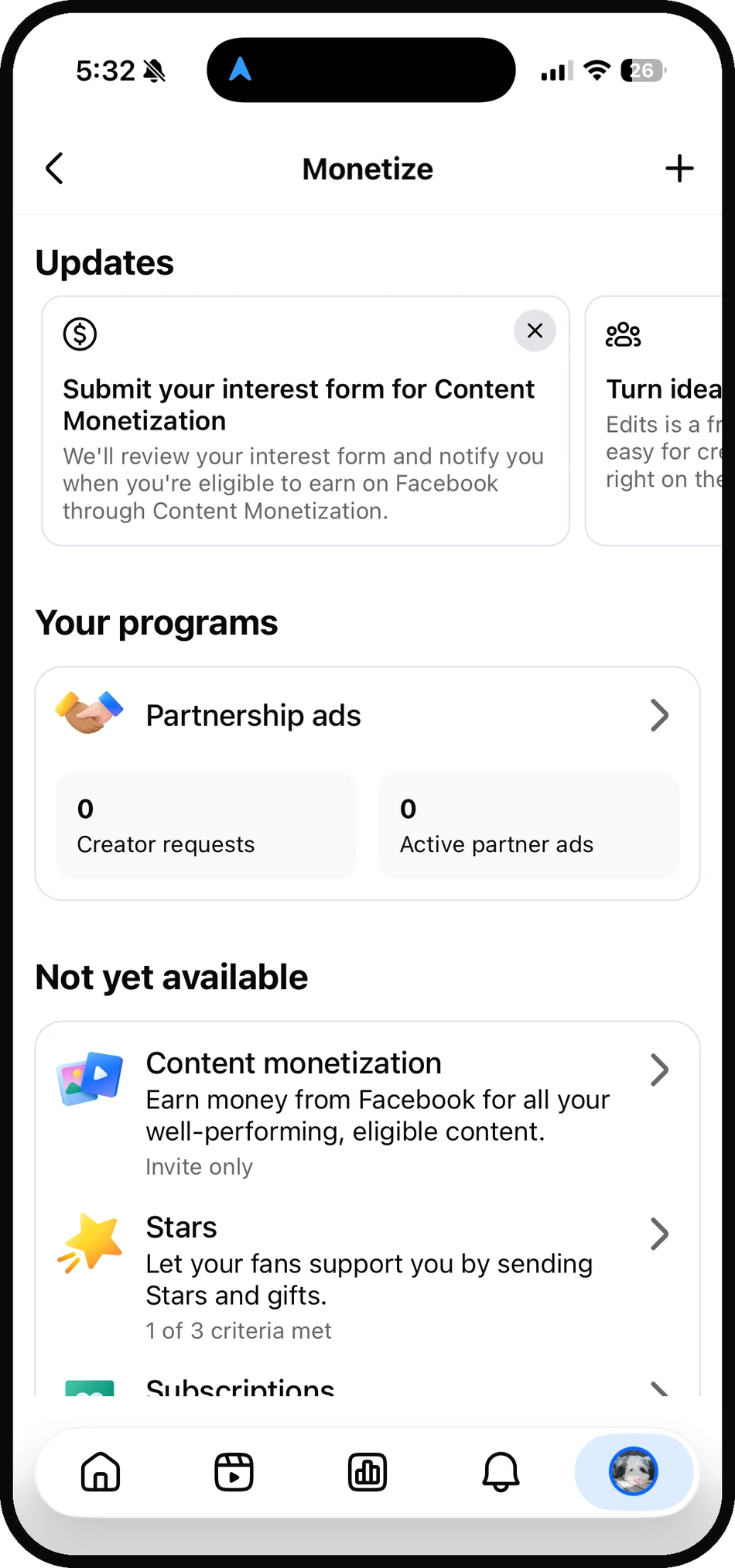
Unified monetization
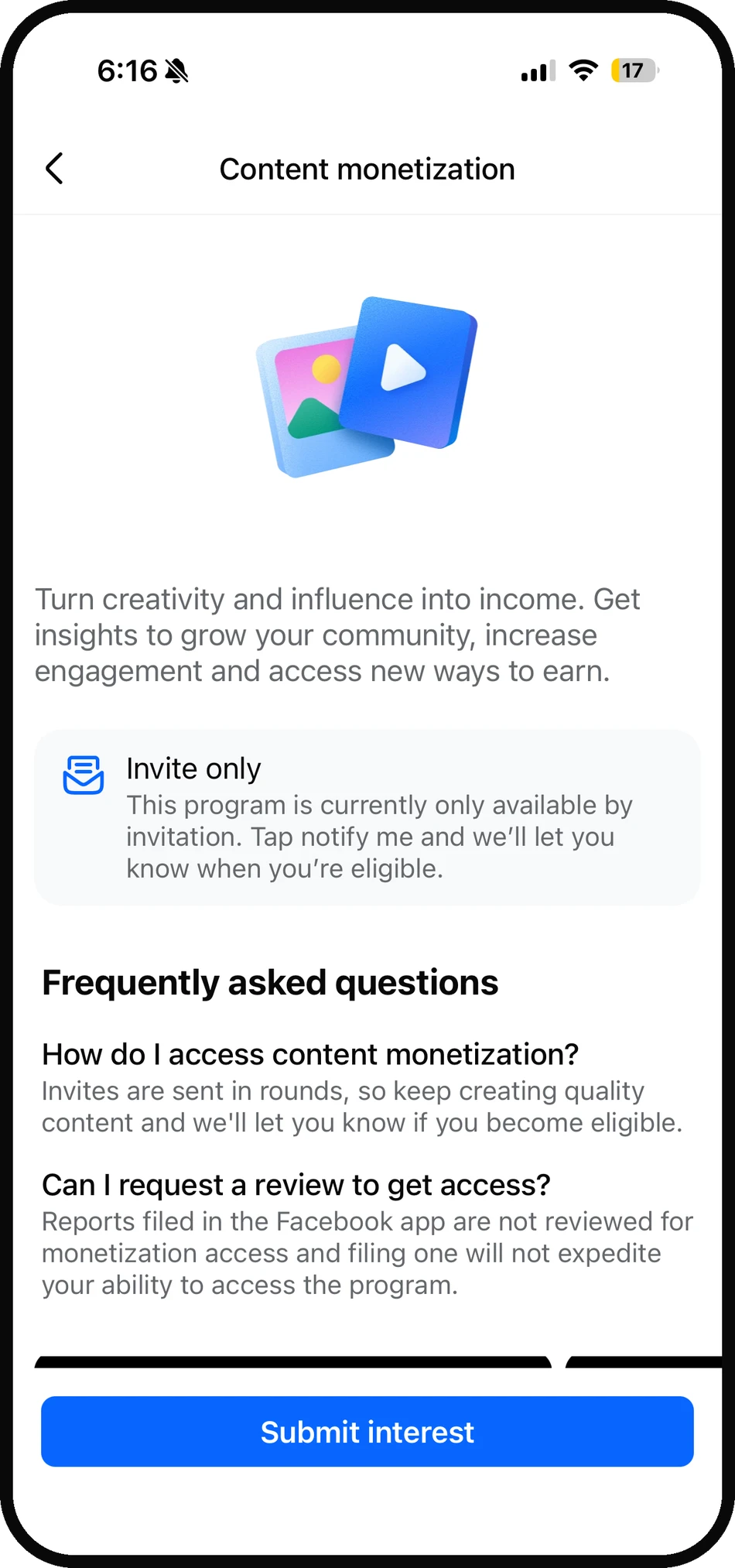
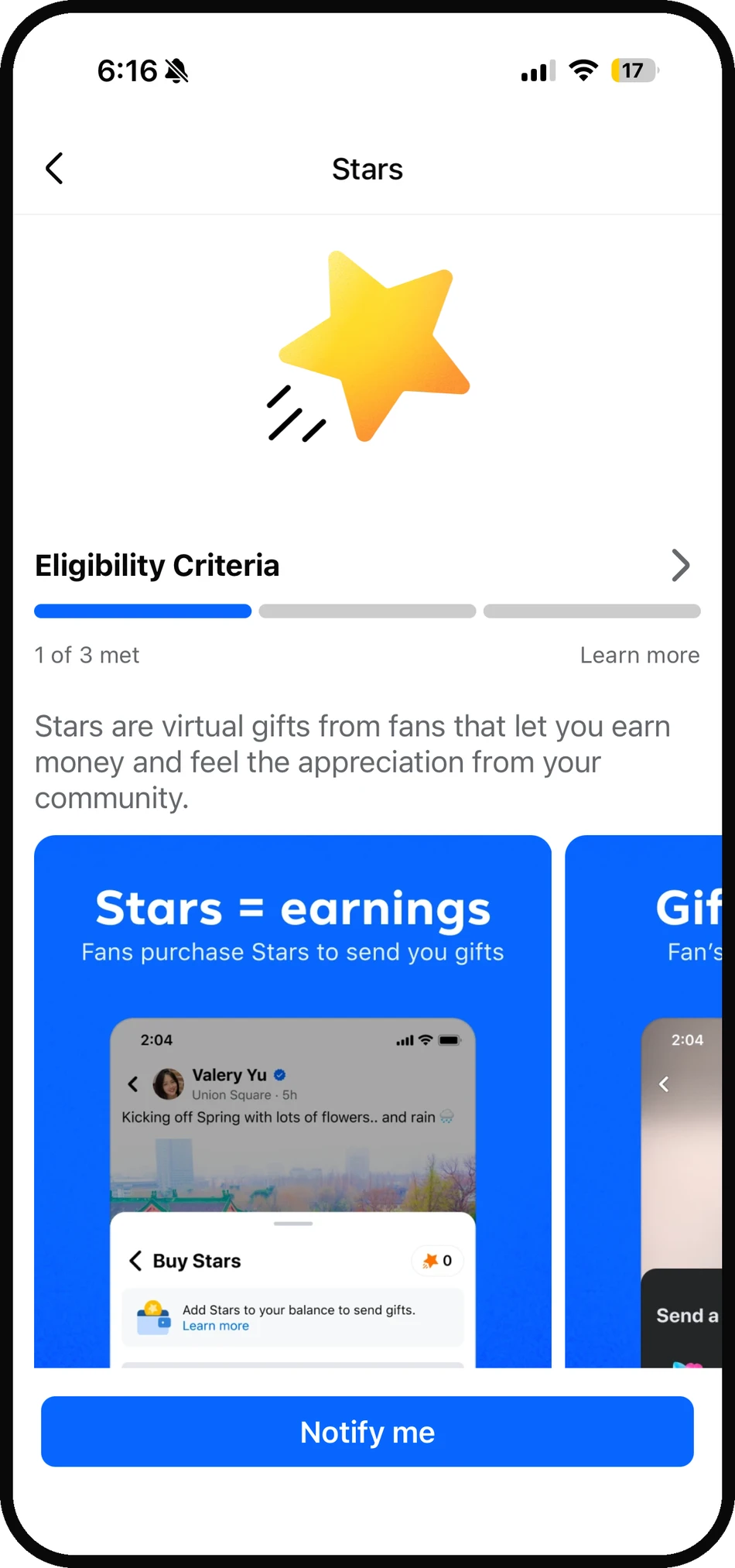
Monetization programs like Stars, subscriptions, and bonuses were owned by different teams, each with its own separate surface. My team consolidated them into one: a single view where a creator sees every program, what it earns, and how close they are to unlocking it. That direction outlasted my tenure, carried forward into the single Content Monetization program that is public today.


The outcome
The unified system landed in leadership review with the head of the Facebook app and turned into adopted roadmaps across teams. On shared patterns, teams shipped faster and held a more consistent bar at the same time, and unification started earning the kind of metrics platform work rarely gets to claim.
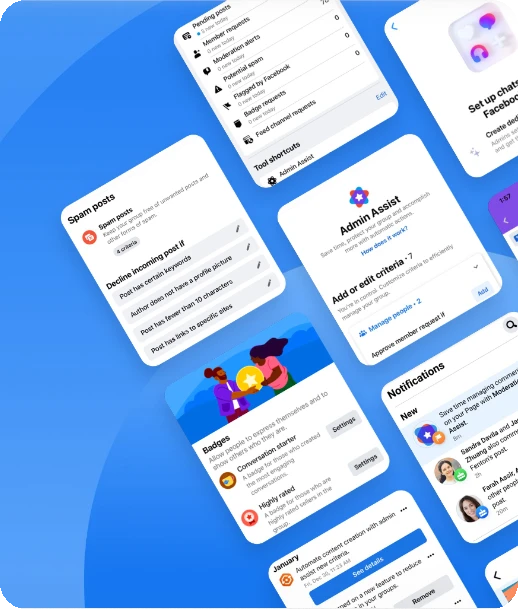
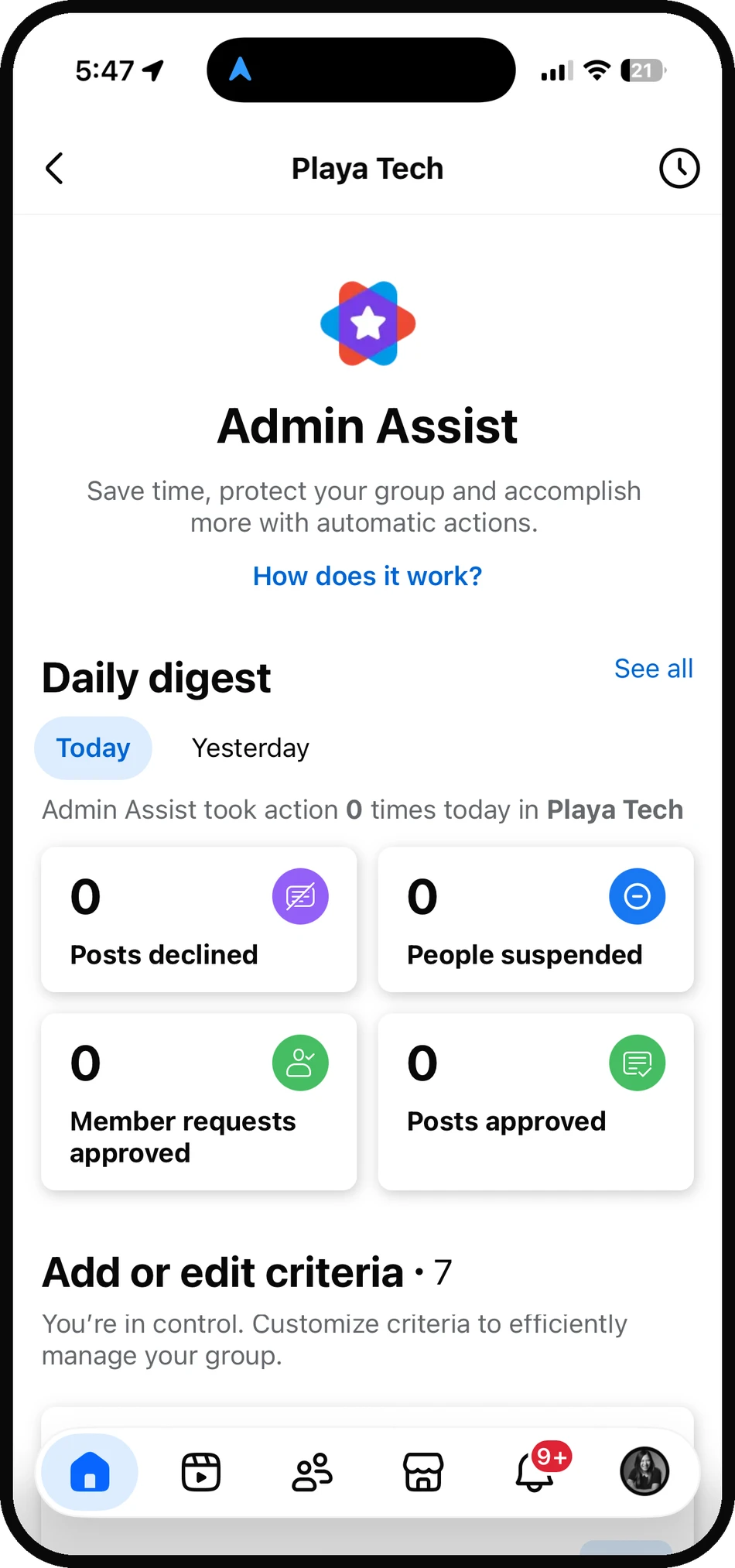
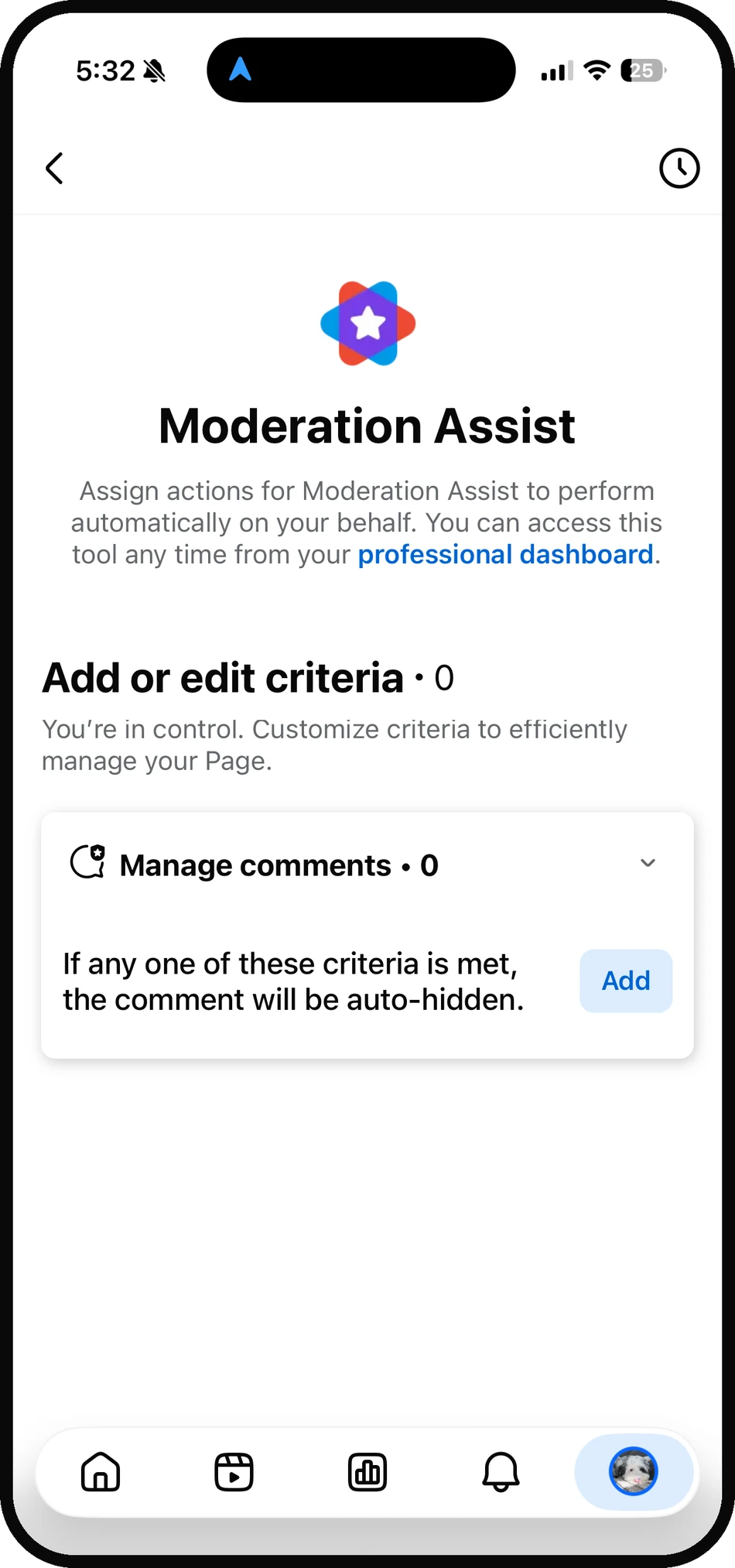
The clearest proof of the system is reuse. My team built the foundational Assist toolset, and other surfaces adopted it directly: the same building blocks power Admin Assist in Groups and Moderation Assist for creators. Unification had been treated as plumbing; by the end it changed how the org values, funds, and leads platform work.