Reviving Facebook’s abandoned jobs product as a proximity-based marketplace for first-time job seekers, designed and validated in a three-month, five-city sprint.

The brief
Facebook had walked away from jobs years earlier, but young adults were already using Marketplace for the essentials of getting established, apartments and cars. Entry-level and trade work was the missing piece, and it was happening in ad hoc group posts with no structure. I led the design vision for a Jobs tab built for first-time seekers: work found by proximity rather than credentials, a browse and message flow with no resumes or portals, and employer listings created in a few taps with AI-assisted drafting. We designed the seeker and employer sides in parallel and shipped an MVP across five cities in three months, enough to prove demand for a US relaunch.
The bet
Facebook had tried a jobs product before and stepped back from it, and what was left was ad hoc: hiring happened as plain posts in local groups. What had changed since was Marketplace. Young adults now came to it for their first apartment and their first car, so in the world of adulting, finding a first job there was a natural fit.


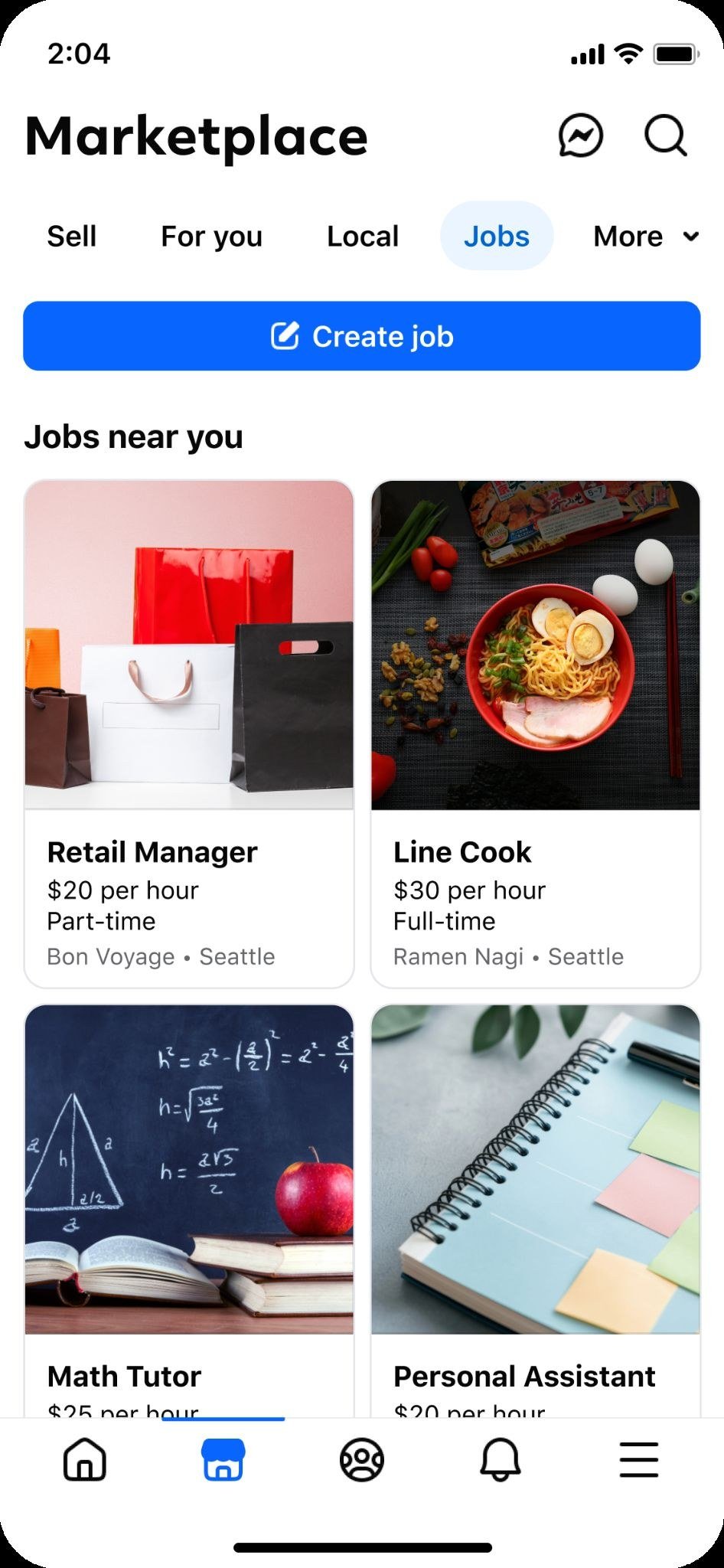
A few calls at the start shaped the rest. I opened the model to consumer-to-consumer work, not just local employers, because young adults want flexibility and a way to build a specialty: a dog walker or a math tutor alongside a barista or a cashier. I pushed for large, image-forward cards so the marketplace felt vibrant and alive, like something worth browsing. And I kept the scope selective, going after the first-job categories and interactions that fit how young adults actually search, rather than porting a generic jobs board.
The experience
The whole flow was built for a first-time job seeker, early in their working life. I pushed relevance over volume: surface the roles someone is most likely to want, weighted by social proof, the local places their friends already go and the ones with a strong reputation, so a first job feels like somewhere you trust rather than a cold application. I held a high systems and craft bar for how the team adapted Marketplace's patterns to a job, reusing the right ones for what a first-time applicant already had at hand, so a role felt as familiar as browsing a couch: pay, type, and location up front, no cover letters. To apply, you message the employer directly, in the same surface young adults already use to buy and sell. No resume, no portal, no additional account to create or new inbox to manage.
The other side
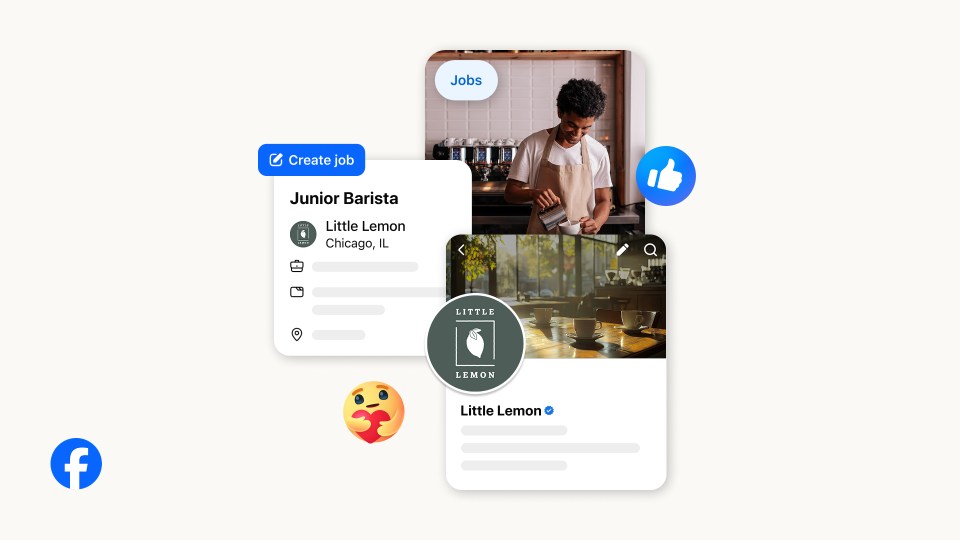
A jobs board only works if both sides show up. For employers, mostly small local businesses, creating a listing had to be effortless, done in a few taps from the Page they already run.
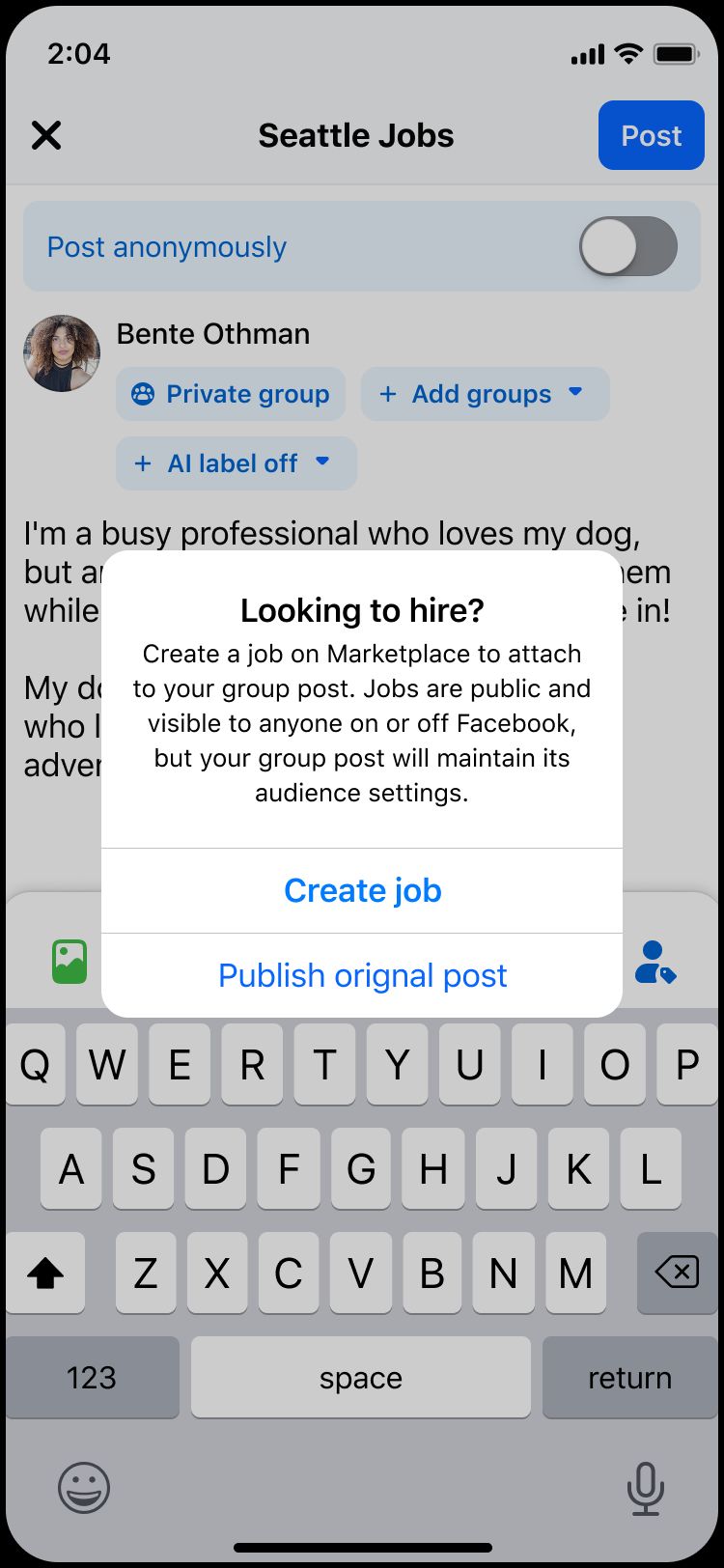
So I drove the team to strip every point of friction out of posting: turn an existing Groups hiring post into a structured listing, draft the job description with AI so an owner starts from something instead of a blank field, and suggest stock imagery when a Page had no photos of its own. The goal was a complete, credible listing without the work of writing one.
The engine
Moving that fast surfaced friction. Work was falling through the cracks, decisions were stalling, and when deliverables slipped the disciplines started pointing fingers. I set up a daily cross-discipline check-in with my product director and engineering leads, run in front of the team, so they could watch the three of us ask each other questions, triage, and prioritize the one decision that mattered most that day. Within two weeks the team had a rhythm and was self-running.
“One of Marketplace’s top priorities—achieving PMF for Jobs—required careful coordination across Eng, PM, and Design. … Her efforts helped transform frequent escalations into a more empathetic, action-oriented culture. The result was better process, better morale, and 2× velocity.”
The outcome
We went from strategy to a shipped MVP in about three months, live in the first five cities, covering both the job-seeker and employer sides. We scoped to what a demand test needed, search and saved-job alerts, and left out what only a full jobs product would need.
The test earned the investment. Jobs relaunched publicly across the US, focused on entry-level, trade, and service work, living in a dedicated Marketplace tab and surfacing in relevant Groups and Pages, with applicants messaging employers directly. It is documented in Meta's newsroom, and the designer I coached through the MVP earned a promotion for the work.