Using Marketplace’s traffic to prove local demand without eroding the commerce utility that made it work, then making the case for Local to earn its own tab.

The brief
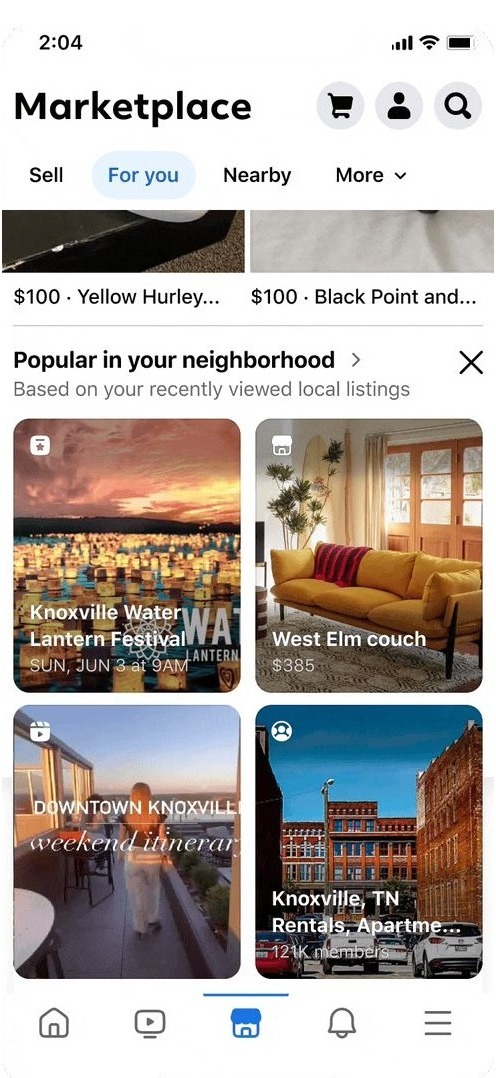
For young adults, Marketplace worked because of proximity. They came to find the couch down the street or a desk from a neighbor, and it was great for things like furniture. The team saw a chance to drive quick engagement wins by stacking in more local content, first garage sale listings, then local events. I pushed back. Every non-commerce unit we added diluted the buy and sell intent that drove retention, and I was not willing to trade the core utility for short-term engagement. My strategy was to use Marketplace's traffic to validate local demand, protect the core by keeping that content from taking over, and argue Local out into its own destination.
The bet
A standalone local product had been tried and had stalled on the hardest part: getting anyone to show up. So rather than build cold again, we took a different approach. Test a Local destination as a subpage inside Marketplace, where young adults already came for local exchange, and let it borrow that distribution and trust. Prove the need with a real audience first. Earn the standalone product second. It was part of the Future of Marketplace vision I led, sized as a multi-year young-adult opportunity.


I grew Local inside destinations people already trusted, instead of launching a new one and hoping they'd find it.
The entry points
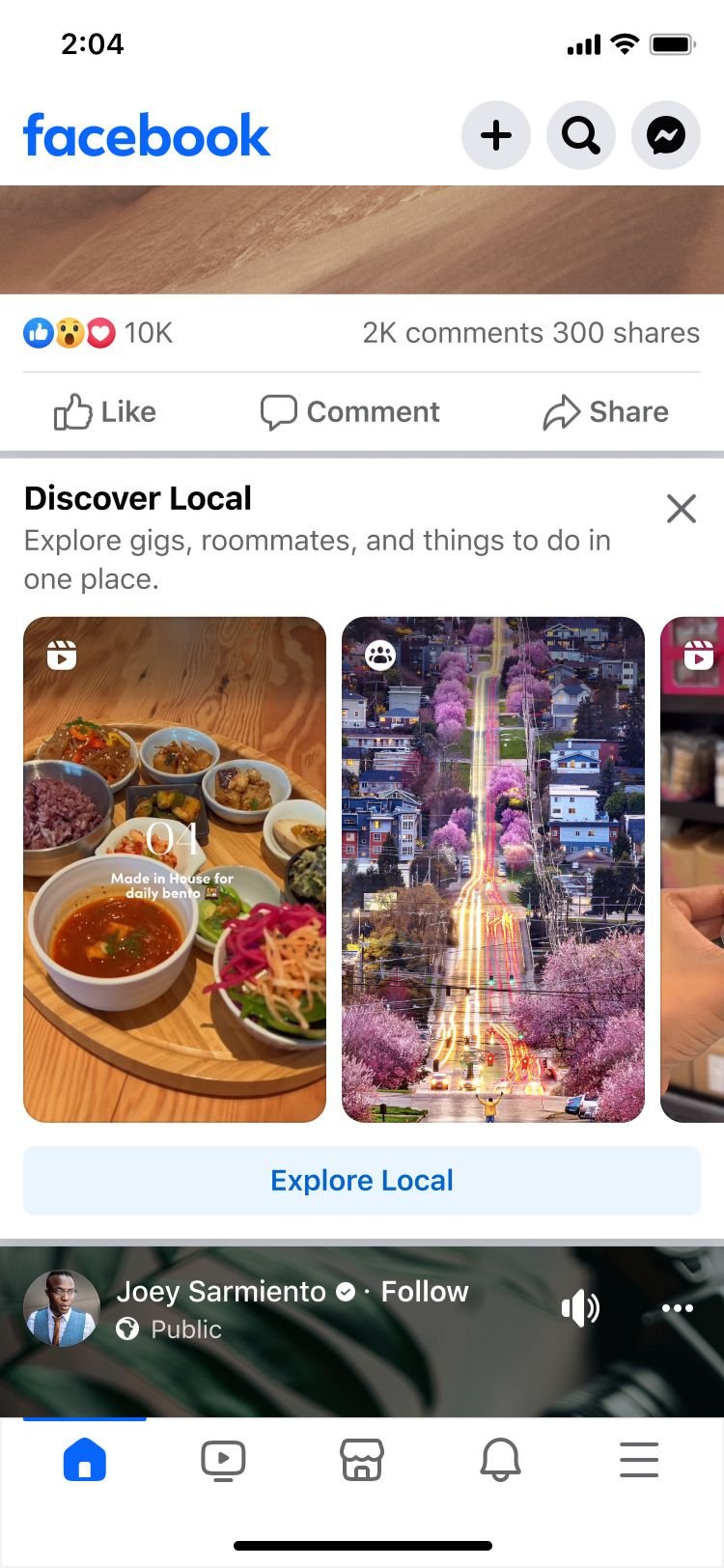
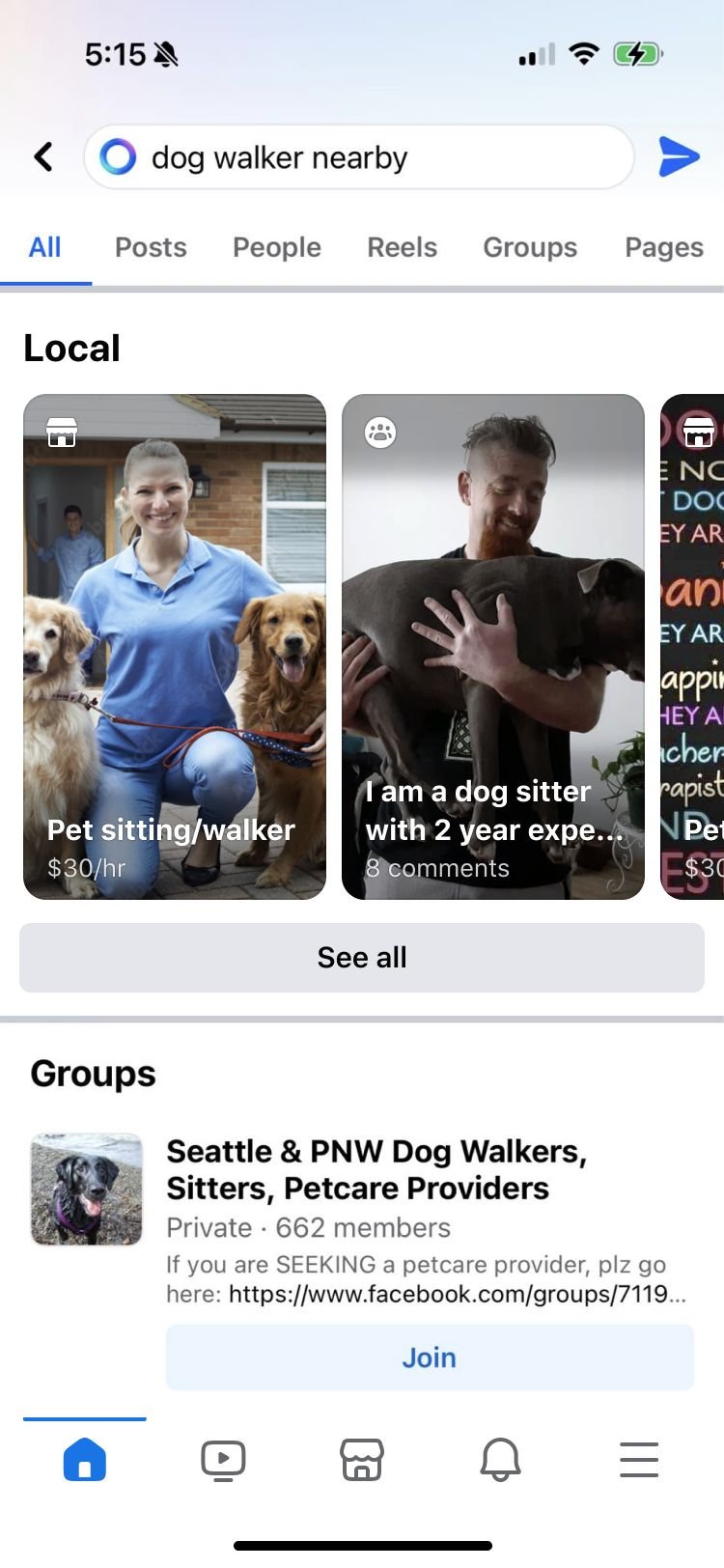
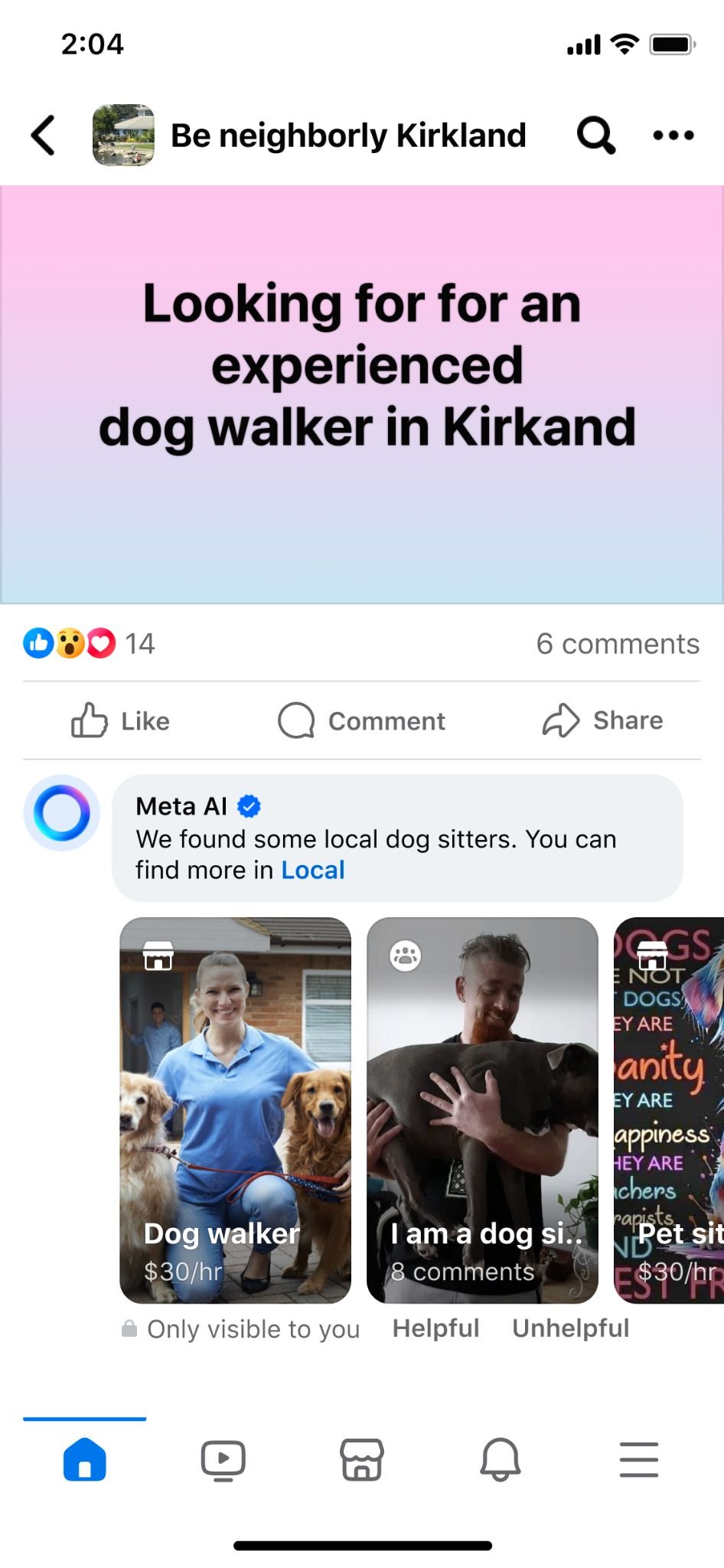
People do not go looking for a “Local tab.” They express a local need in the moment, in Feed, in Search, in a neighborhood group. So the design met that intent where it already happened and pathed it into Local: a discovery unit in Feed, local answers in Search, and a nudge on the group posts where people ask their neighbors first.


The destination
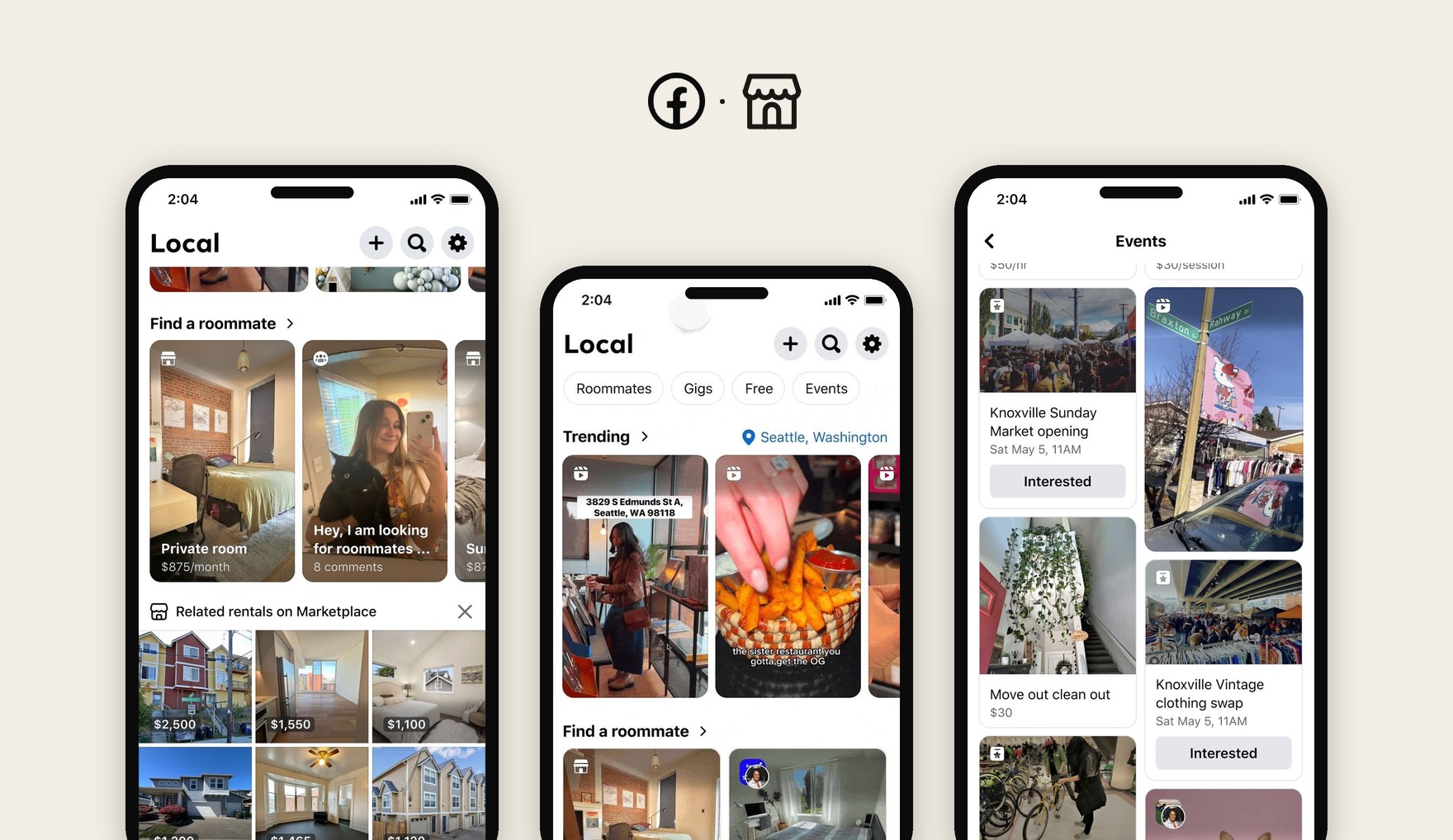
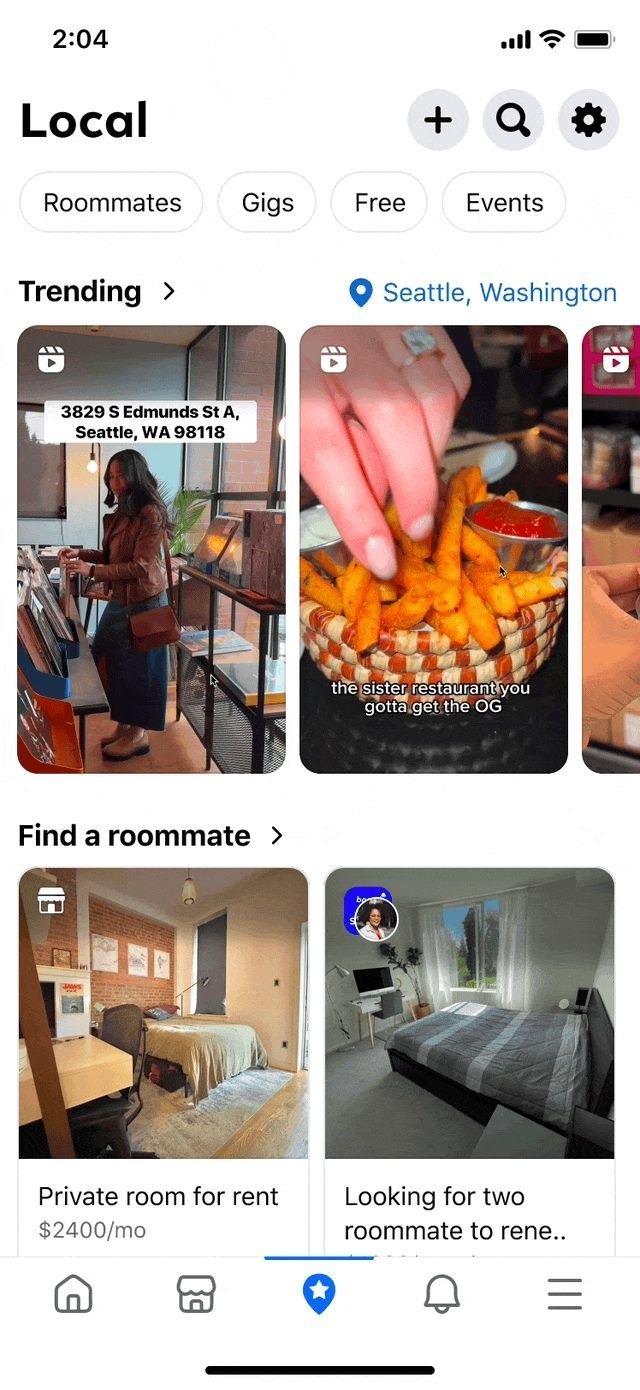
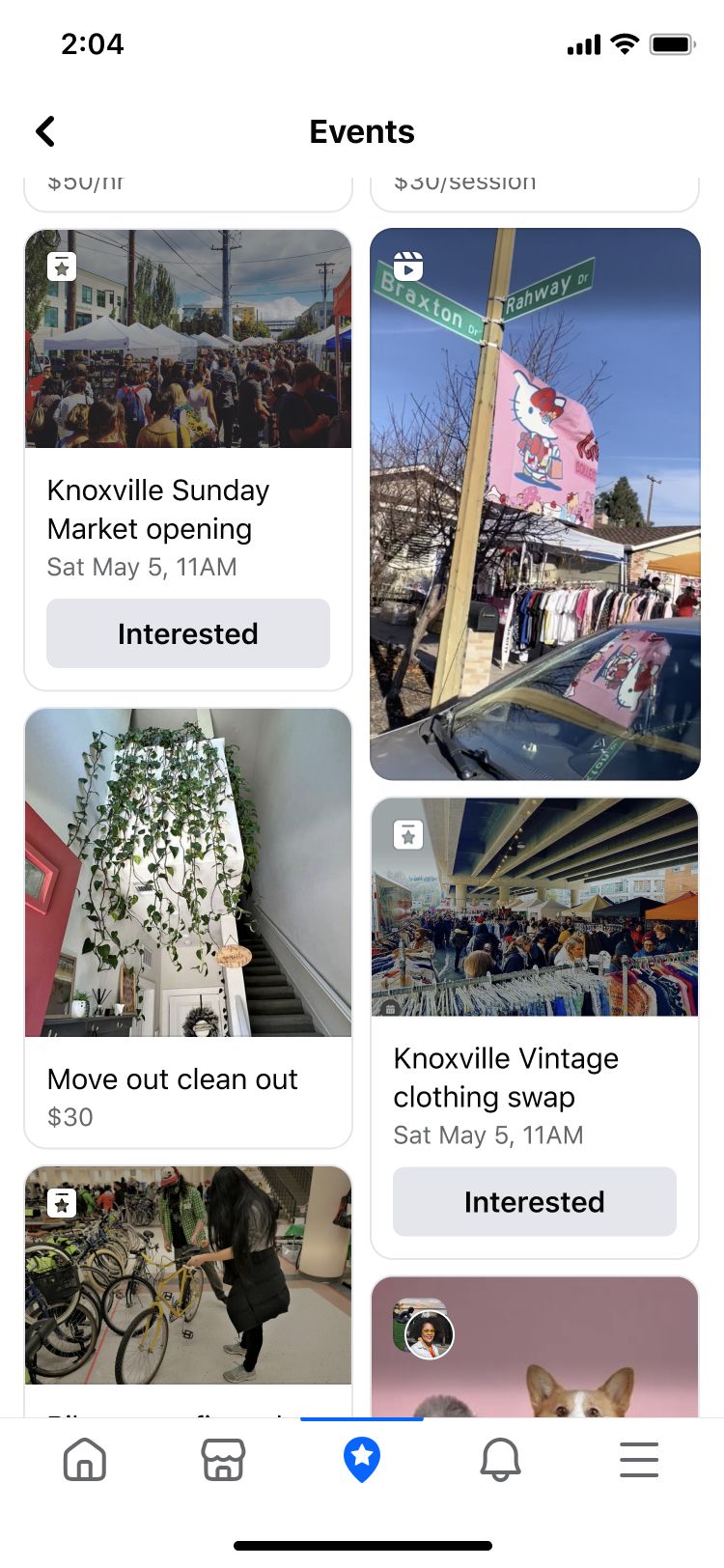
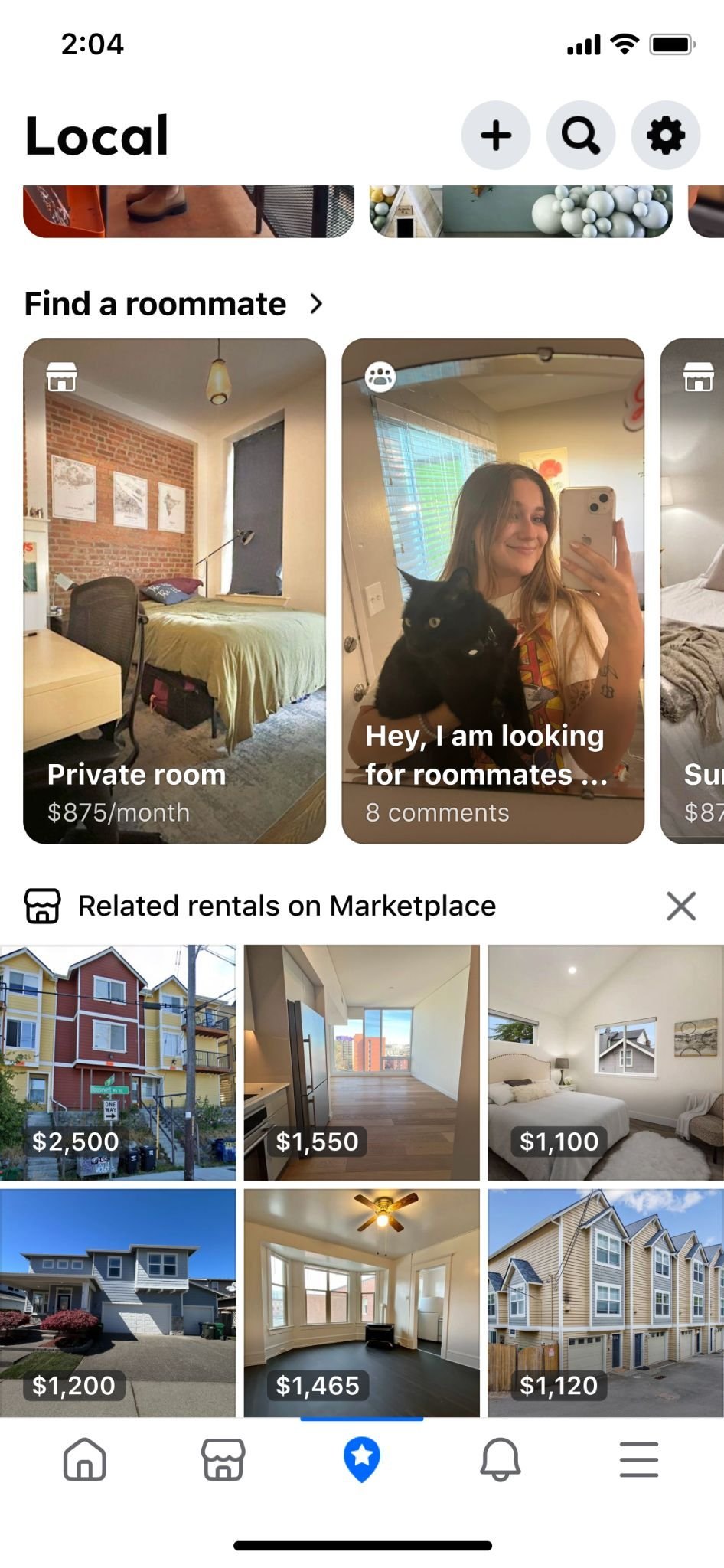
The destination pulled the neighborhood into one place: local events near you, roommates and rentals in your area, and recommendations tuned to where you live, drawn from surfaces Facebook already had.


The outcome
The subpage did its job: it proved young adults would come to Facebook to be in the know locally, without a cold-start problem. Proving the bet, and designing the first version of the tab, was what funded a dedicated team. I handed the work off to that team, and they carried it to a full launch in the following half-year: the Facebook Local tab, pulling together the best local content from Marketplace, Groups, and Events, testing across 10 US cities, documented in Meta's newsroom.