← All work

Designing trust across Groups and Marketplace

I led integrity design for Facebook Groups, then the trust vision for a company-priority Marketplace sprint, accountable to the app’s leadership. Two assignments, one discipline: designing how a platform decides who to trust, and making those calls more human.

RoleOrg Design Lead
ScopeGroups Integrity, Marketplace
Trust & Safety
OutcomeMade trust one of Marketplace’s five core strategies
Facebook Groups, where communities of strangers share what matters most

The brief

The two riskiest things strangers do on Facebook

Trust is the quiet infrastructure of Facebook. In Groups, people share health, parenting, and politics with communities of strangers. On Marketplace, they meet strangers in parking lots carrying cash. Policy sets what is allowed; design decides what actually happens, what gets flagged, who gets believed, how a mistake gets fixed. For four years I owned design for both kinds of risk, and the job underneath was the same: make the platform’s judgment calls more accurate, and more human.

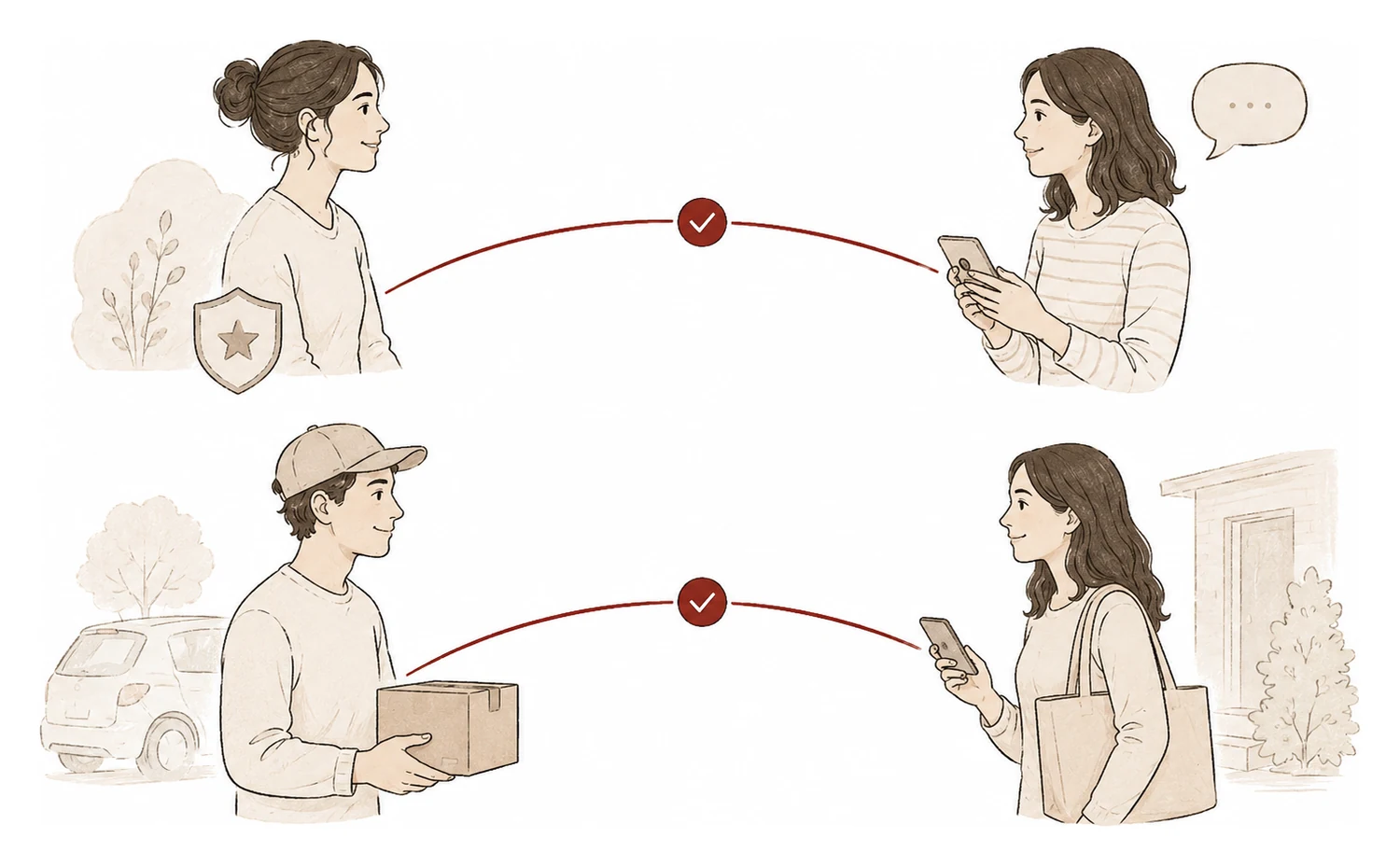
Two trust relationships between strangers: in Groups, a community admin and a member; on Marketplace, a seller handing over a boxed item and a buyer, each pair joined by a verified checkmark.

Same problem, two surfaces: a stranger has to decide whether another stranger is safe to trust.

Groups · The problem

The wrong people removed, the real harm missed

The same system made two opposite mistakes. Automated enforcement removed legitimate members over context it could not read, while real harm slipped past the admins who knew their communities best but were buried in manual moderation. And one blunt standard governed every group, though an abuse-survivor group and a local buy-and-sell group share almost none of the same norms.

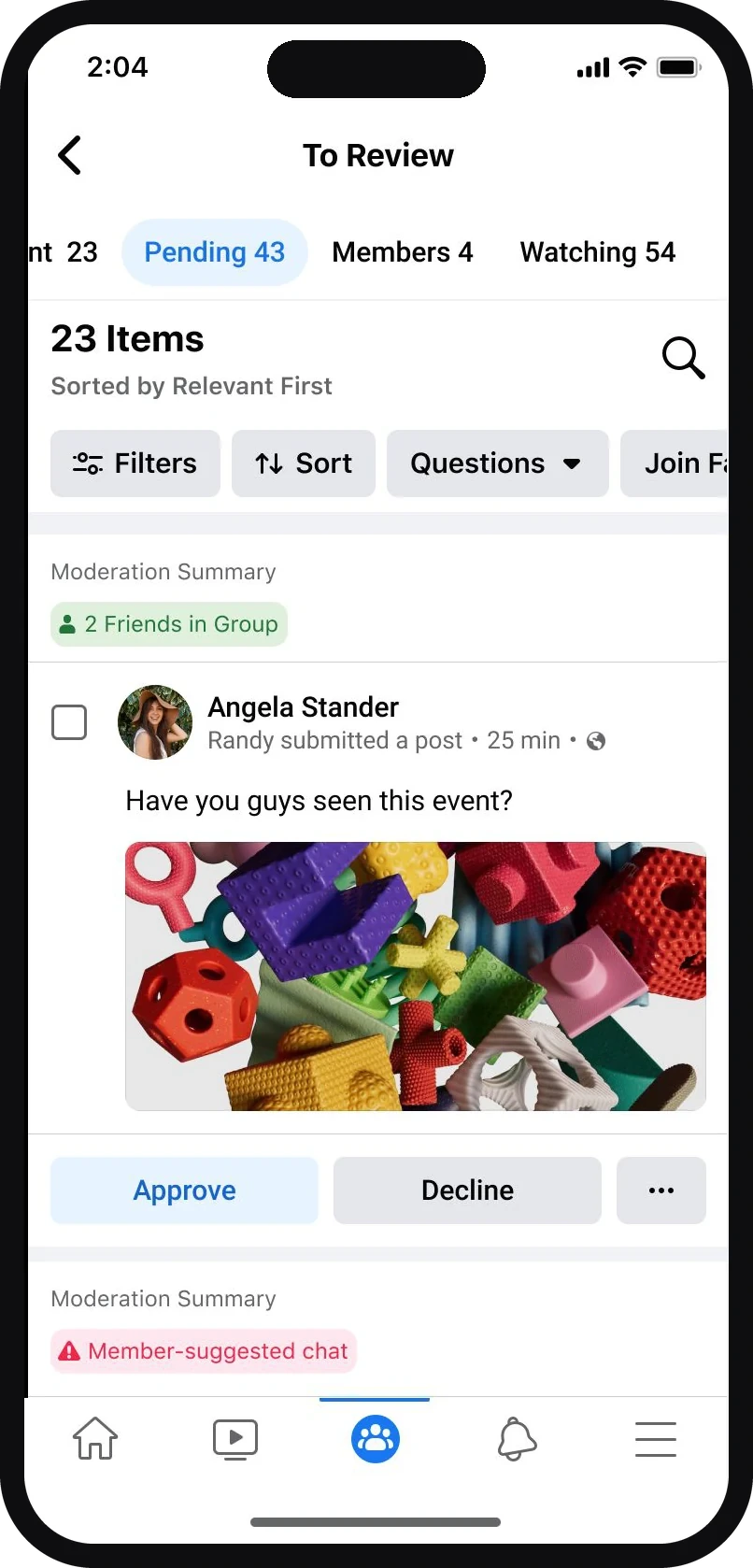
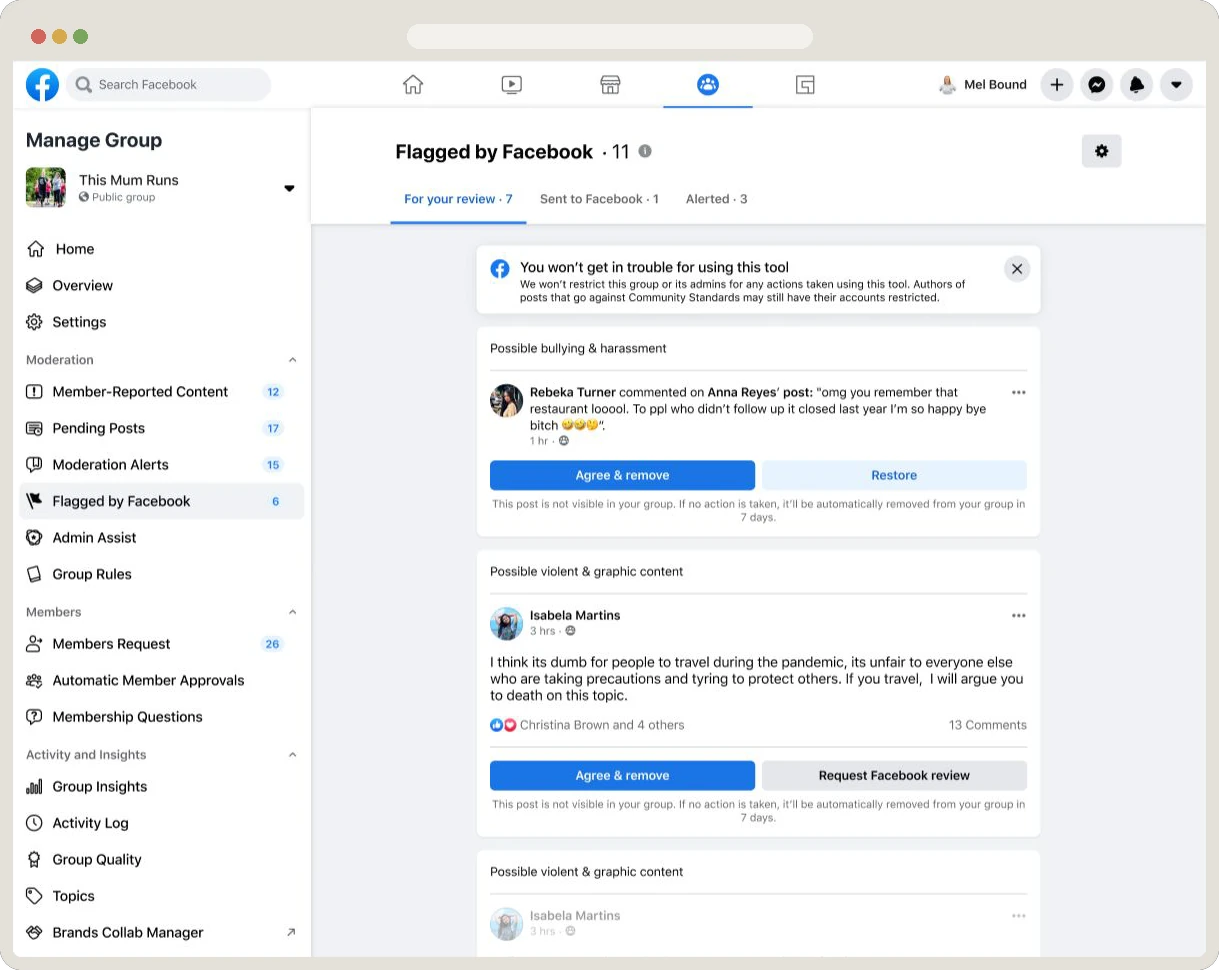
A mobile moderation queue for a group admin, with separate queues for reported content and comments and a running count of items still to review The Flagged by Facebook panel: content the automated system flagged, waiting for an admin to agree and remove it or restore it

The manual load admins carried: endless review queues, and every machine flag waiting on a human to judge.

Groups · The system

Community leaders, given leverage instead of homework

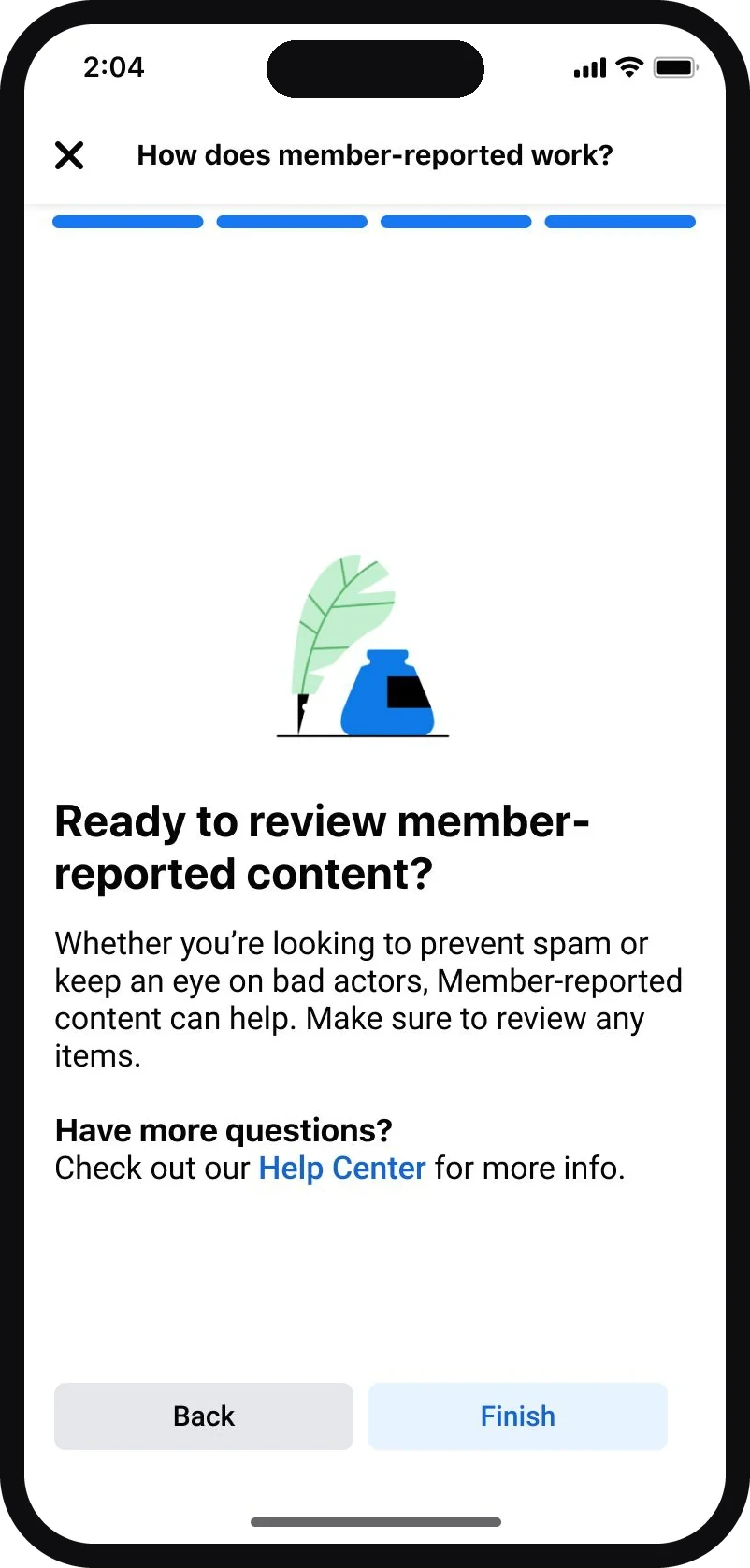
I led governance design for Groups and its ecosystem of tens of millions of admins and moderators. We turned scattered moderation signals into working dashboards, shipped Flagged by Facebook so admins could judge flagged content against their own community’s norms before removal, a human call exactly where the machine was least sure, and rebuilt member reporting so reports got completed and fed every correction back into enforcement. The reframe I coached in: give every community governance tuned to its own norms.

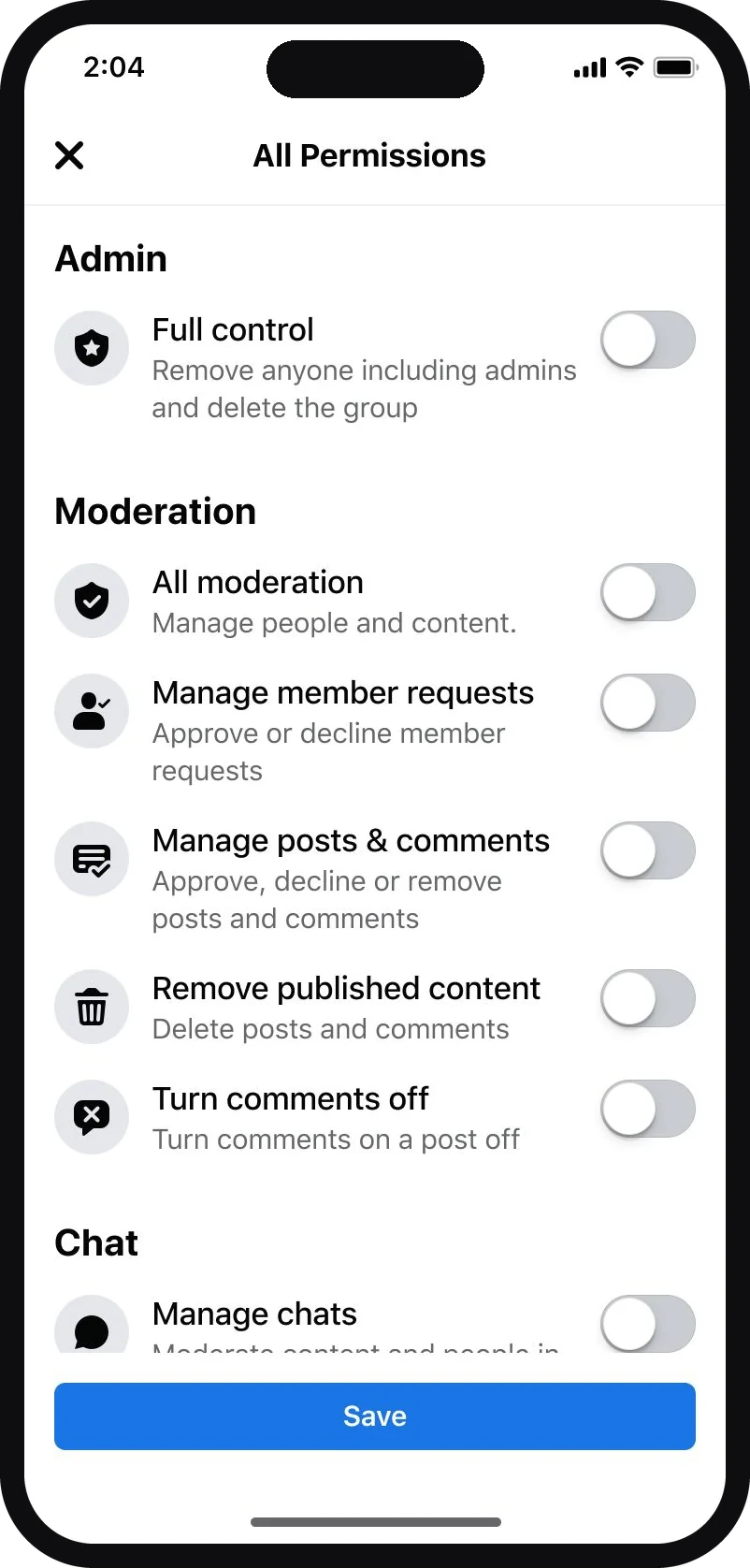
A roles and permissions screen where a lead admin assigns specific moderation abilities to other admins and moderators An onboarding screen inviting a new moderator to start reviewing member-reported content in their community

Delegate moderation by role, and onboard the people who know the community into the review loop.

+178%
Admin actions taken on flagged content
Member report completion, after the rebuild
+160%
Above goal, turning active members into admins

The craft

Trust has to look trustworthy

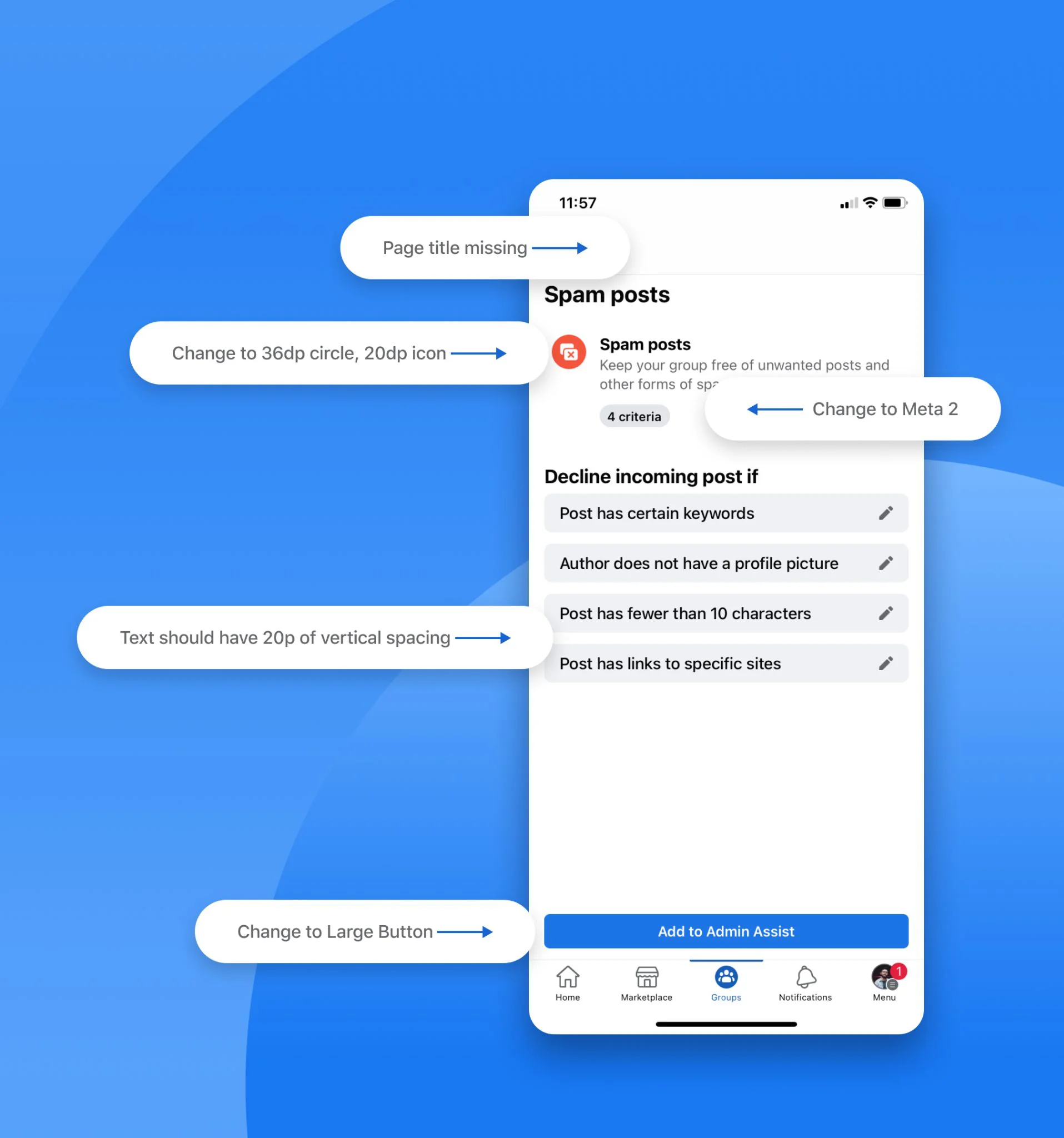
An enforcement tool only works if it feels considered; the pixels carry the credibility. I held the same bar on these governance surfaces I would on any launch, auditing them in critique down to hierarchy, spacing, and copy.

An annotated design-quality audit of a group admin enforcement screen, marking up spacing, hierarchy, and copy against the quality bar

Marketplace · The problem

Nobody could map “trust,” so design took the question

By 2024, trust was Marketplace’s most-cited pain point, and leadership stood up a company-priority sprint across Marketplace and integrity teams, with me leading design, accountable to the app’s leadership. What it did not have was a map. So design took it on: I had a designer run social listening across Reddit and forums, where Marketplace complaints are practically a genre, and we distilled the noise into the three questions every buyer and seller was really asking.

“Is this listing even real?” “Seller ghosted me after I paid.” “Risking my life to sell this toaster.” “Is this person even real?” “Is it safe to give my home address?” “I reported it and nothing happened.”
which really come down to three questions, each its own workstream
What am I buying?
Listing accuracy and quality signals
Who am I dealing with?
Verification, ratings and reviews, bad-actor enforcement
How do I do this safely?
Meetup safety, responsiveness, and reporting you can follow

The public wall of complaints, distilled to three questions, each becoming a workstream.

Marketplace · The sprint

The hardest question was who to trust

“Bad actor” is not a design brief. Drawing on my actor-classification work at Amazon’s Alexa store, where the population that mattered most was not malicious, just low quality, I mapped Marketplace’s real populations and gave each its own treatment instead of one blunt rule. Verification got country-level rigor: we sat below markets like Europe and Singapore, where regulators require identity to buy and sell, so I designed toward each regime rather than a lowest bar. I framed the effort as three public commitments and landed it as the 18-month trust roadmap.

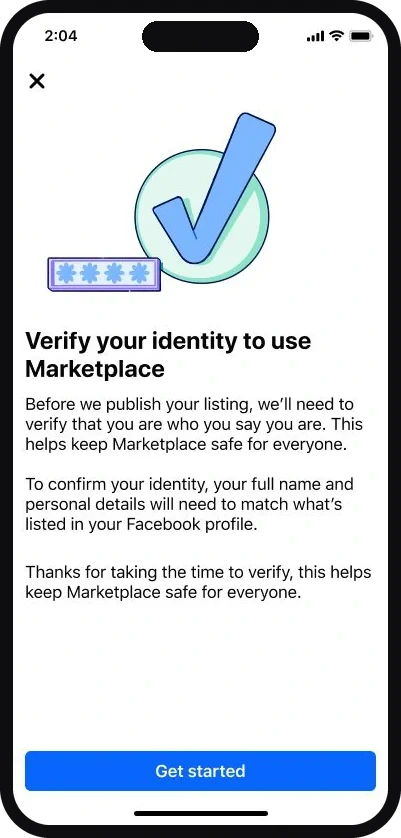
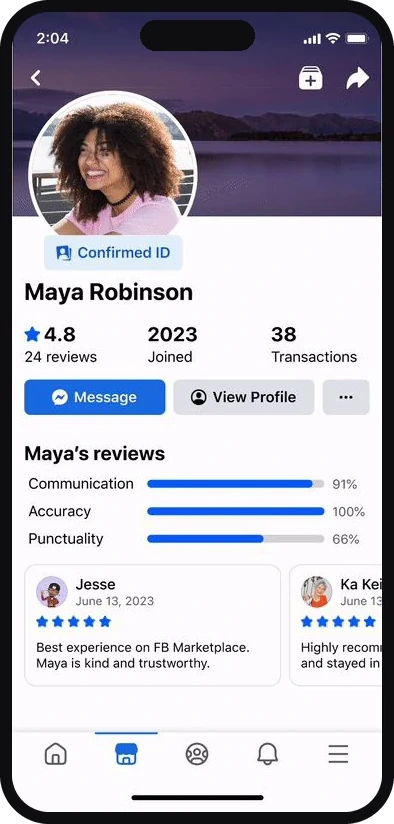
A Marketplace screen asking a person to verify their identity before they can buy and sell A seller profile carrying a Confirmed ID badge so buyers can see the person is verified A vehicle listing whose VIN has been validated against an authoritative source

Verification, designed to each market’s bar: identity to buy and sell, a Confirmed ID on the profile, and listing facts validated at the source.

+61%
Ratings and reviews coverage, in a single half
US listing coverage of community feedback
3
Public trust commitments I framed and shipped

Nobody could define trust for Marketplace, so I made design own the question, and landed it as the 18-month roadmap.

The outcome

What outlived the sprint

The proof is what outlasted me. On Groups, the governance team became one of the most productive in Design, its work on the community-summit stage. On Marketplace, trust became one of five core strategies, one of three I co-led, and the commitments live publicly on Meta’s Marketplace safety hub as a promise to users and regulators. The verification work kept shipping after I left.

3 of 5
Marketplace core strategies I co-led
−60%
Top user-reported issues, from the quality programs I drove
18 mo
Trust roadmap still shipping after I left

All work