← All work

Marketplace: Facebook’s front door for young adults

Facebook leadership set a goal to grow young adults on the platform. They were already using Marketplace for utility, so I led the strategy to reshape it around them and make it social, turning visits into engagement across Facebook. The approach became a full Facebook strategy the following year.

RoleMarketplace Org Lead · 3 pillars, 20+ Design, 500+ eng
Scope1B+ monthly users · young-adult growth
OutcomeSet the growth strategy that shipped as the Marketplace Glow Up
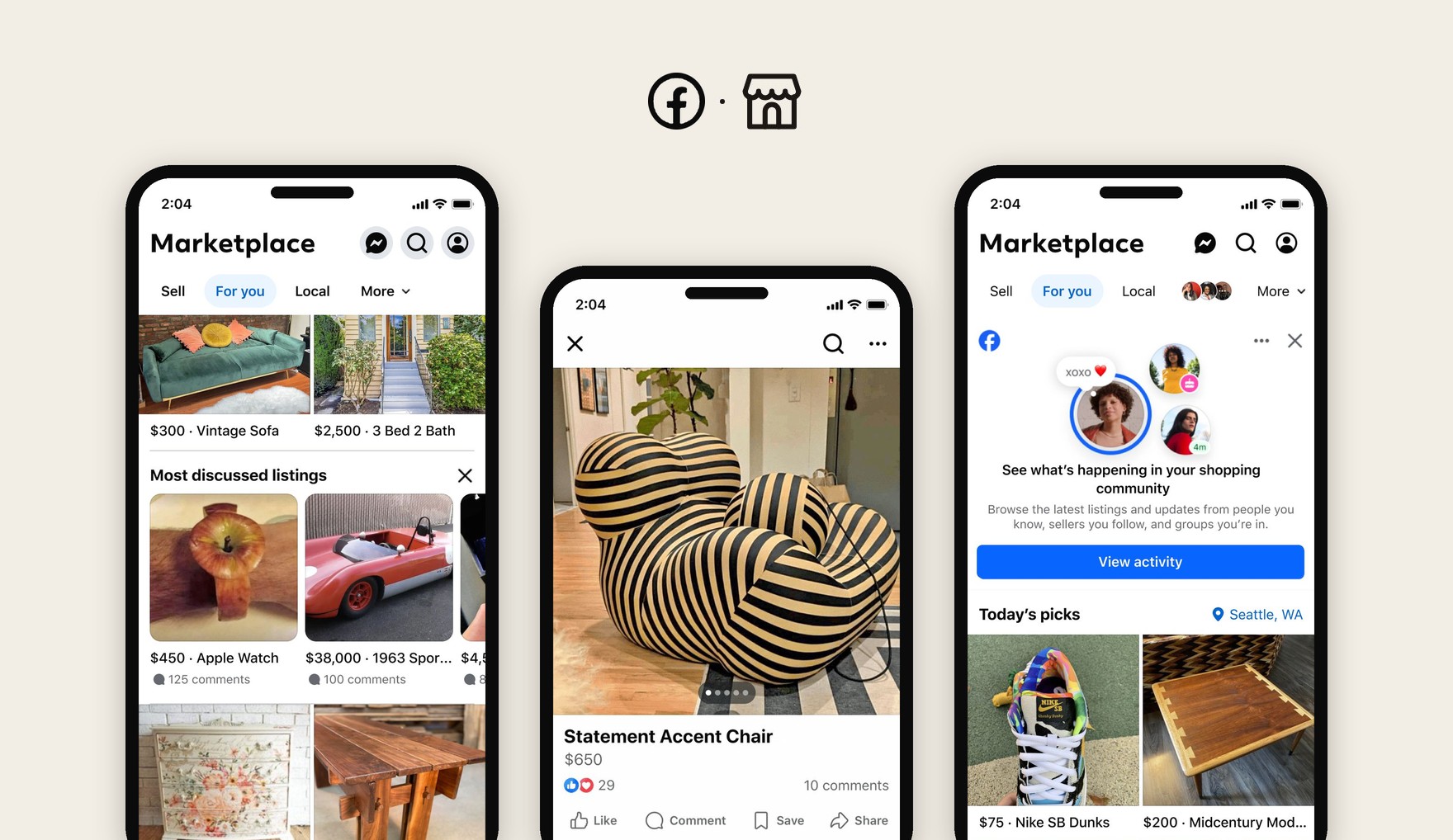
Three redesigned Marketplace screens: most discussed listings, a listing with comments and reactions, and the shopping community

The brief

Start with one shopper

She is 22, new to the city, and needs a car she can afford. She finds it on Marketplace: a 2008 wagon, $4,500, twenty minutes away. She screenshots it into the group chat, her friends weigh in, her dad asks about the timing belt. That is what shopping looks like for a young adult: local, social, and shared. Facebook had the first part and was leaving the other two on the table.

Zoom out and the stakes were company-sized. Facebook's audience was aging, and leadership set a top-line goal: bring more young adults, and eventually teens, to the platform. Marketplace was the opening, because young adults already came for the essentials of adulting, like furnishing a first apartment with roommates, finding a first car, or reselling what they’d outgrown. The question was how to turn that utility into a reason to stay.

1 in 4
Young-adult daily users in the US and Canada visit Marketplace daily
200M+
Fashion items listed in the US, the second-largest category, much of it young-adult resale
Top 5
Vehicles rank among the top searches for young adults
The research

The questions that shaped the strategy

I helped start Facebook's young-adult strategy on the Creators team, presenting it to our head of product. Carrying it into Marketplace let me bring this next chapter to the same VP, and I led the early research and aligned a new task force on the questions that would drive the work:

I askedWhat actually brings a young adult to Facebook today, and what would make the first visit worth repeating?
We learnedUtility is the whole relationship. Young adults who use Marketplace use only Marketplace, and nothing else on Facebook.
I askedWhat turns a transaction into a habit: what does shopping look like when it's social instead of solitary?
We learnedTheir shopping was already social, in group chats and screenshots. It just wasn't happening on the platform.
I askedWhere should Marketplace hand a young adult off to the rest of Facebook, so a useful visit becomes a reason to stay?
We learnedSocial had to serve the utility first. Anything that slowed the transaction pushed young adults back off the platform.
The strategy I took to leadershipMake Marketplace young adults' front door: redesign it around their needs, make shopping social, and path them into the rest of Facebook. Co-authored with my product director, funded phase by phase.

The strategy

Turning a growth goal into a product strategy

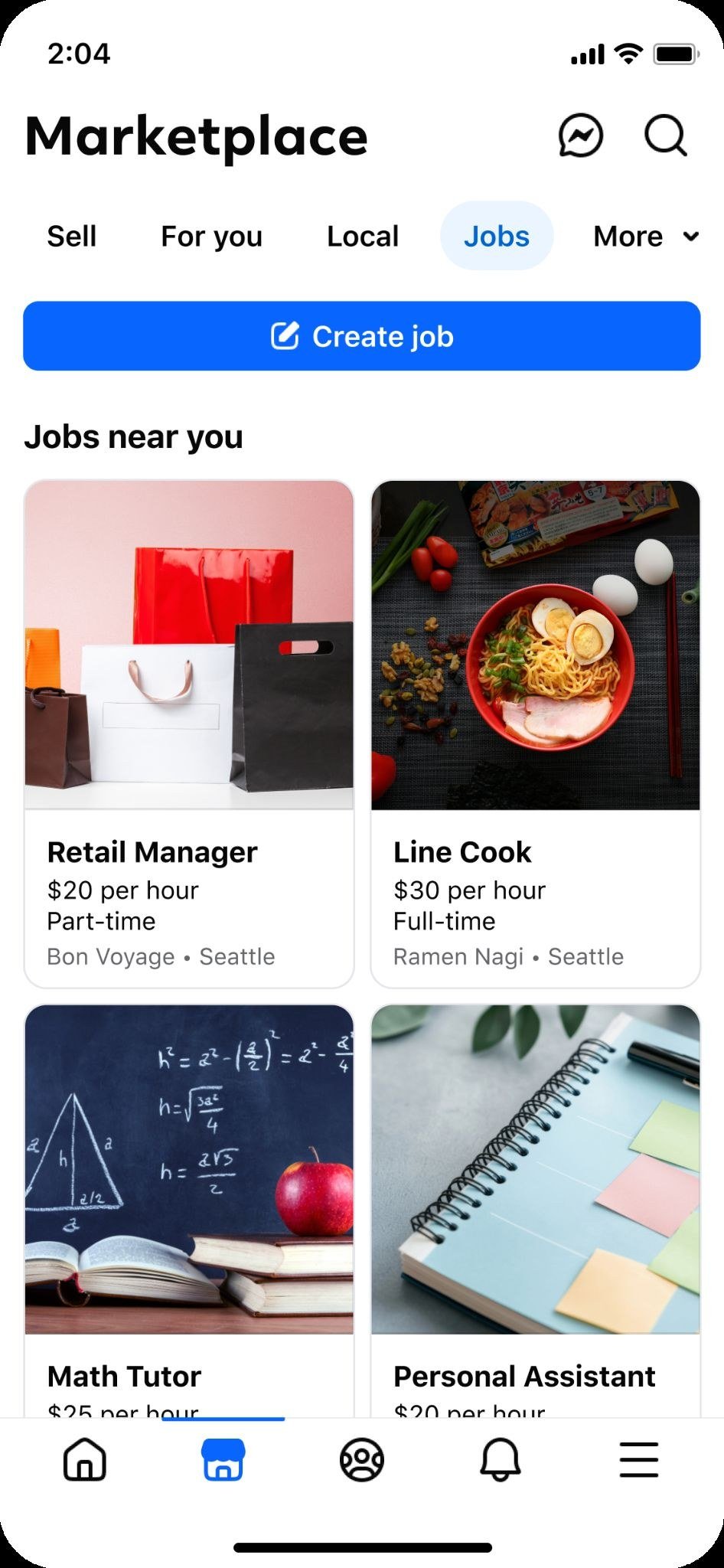
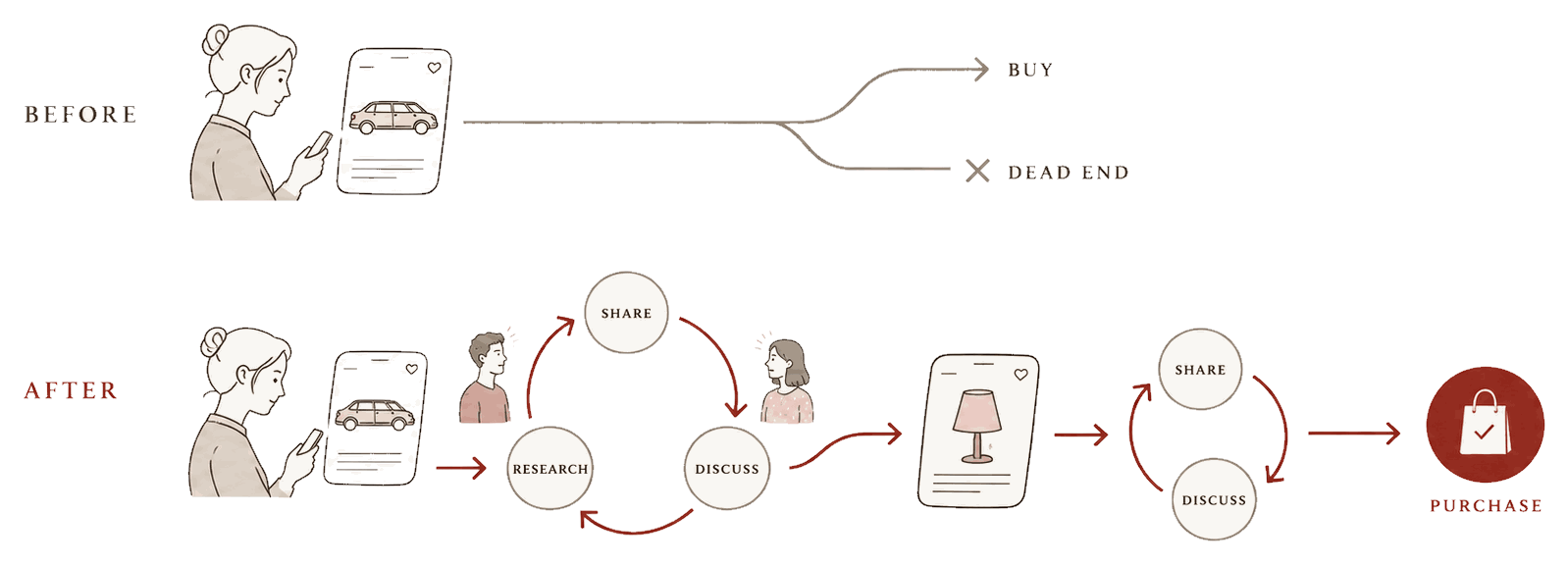
The bet: bring Facebook's real strengths, social connection, social proof, and your network of friends, into shopping. The default was to keep tuning the funnel, sharper ranking and louder CTAs to move people to a message faster. I pushed toward the whole purchase journey instead. Years in commerce, at Amazon and RAPP before it, had convinced me the journey itself is where engagement lives, and that young adults already shop this way: friends get you to the right find faster, and with more trust. Build Marketplace around that, and social turns a useful visit into a returning one, and a returning one into engagement across Facebook. It was a bet made in stages, each phase paying for the next, and the work shipped across several half-year cycles alongside the relaunch of Jobs, a dedicated tab for local entry-level work. The seller side of this same market, shipped commerce and the seller experience, ran as its own strategy: Scaling Marketplace commerce.

Before and after journeys: before, a car listing dead-ends at buy or leave; after, social loops of share, discuss, and research carry a shopper to another listing and through to purchase
Before: a listing dead-ends at buy or leave. After: share, discuss, research loops carry a shopper from listing to listing, and to purchase.

The experience

On the listing: help for a first-time buyer

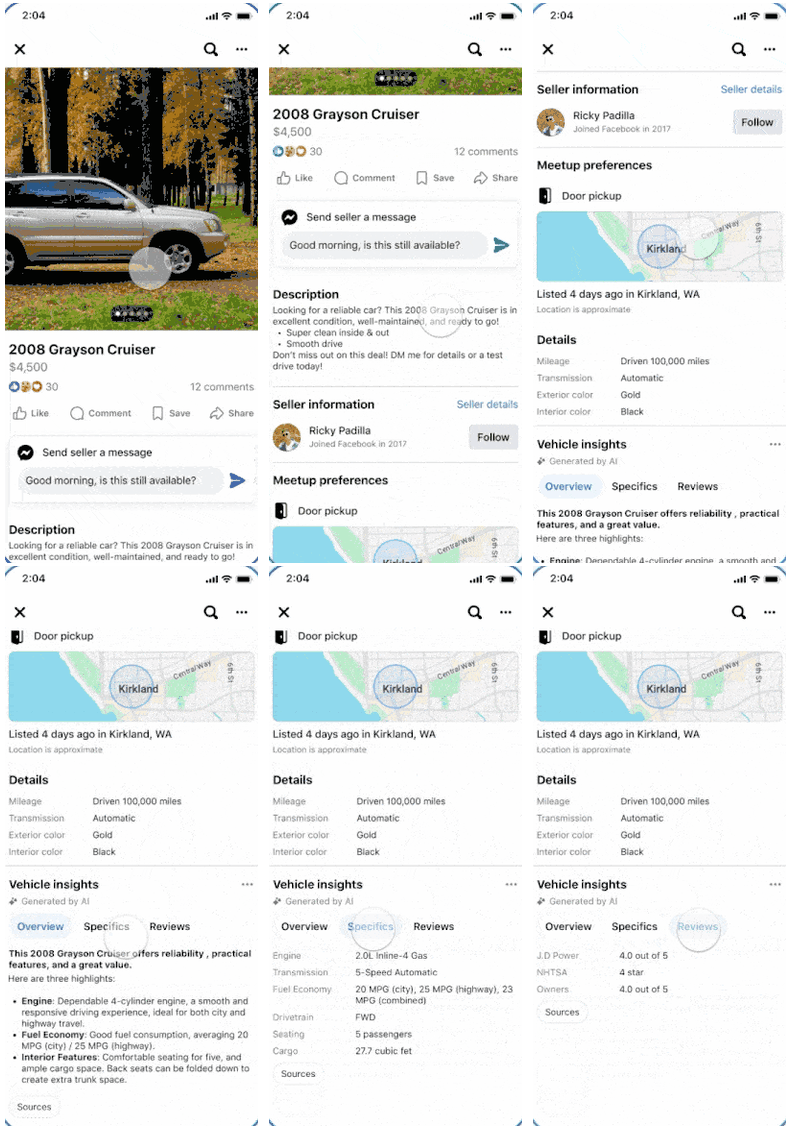
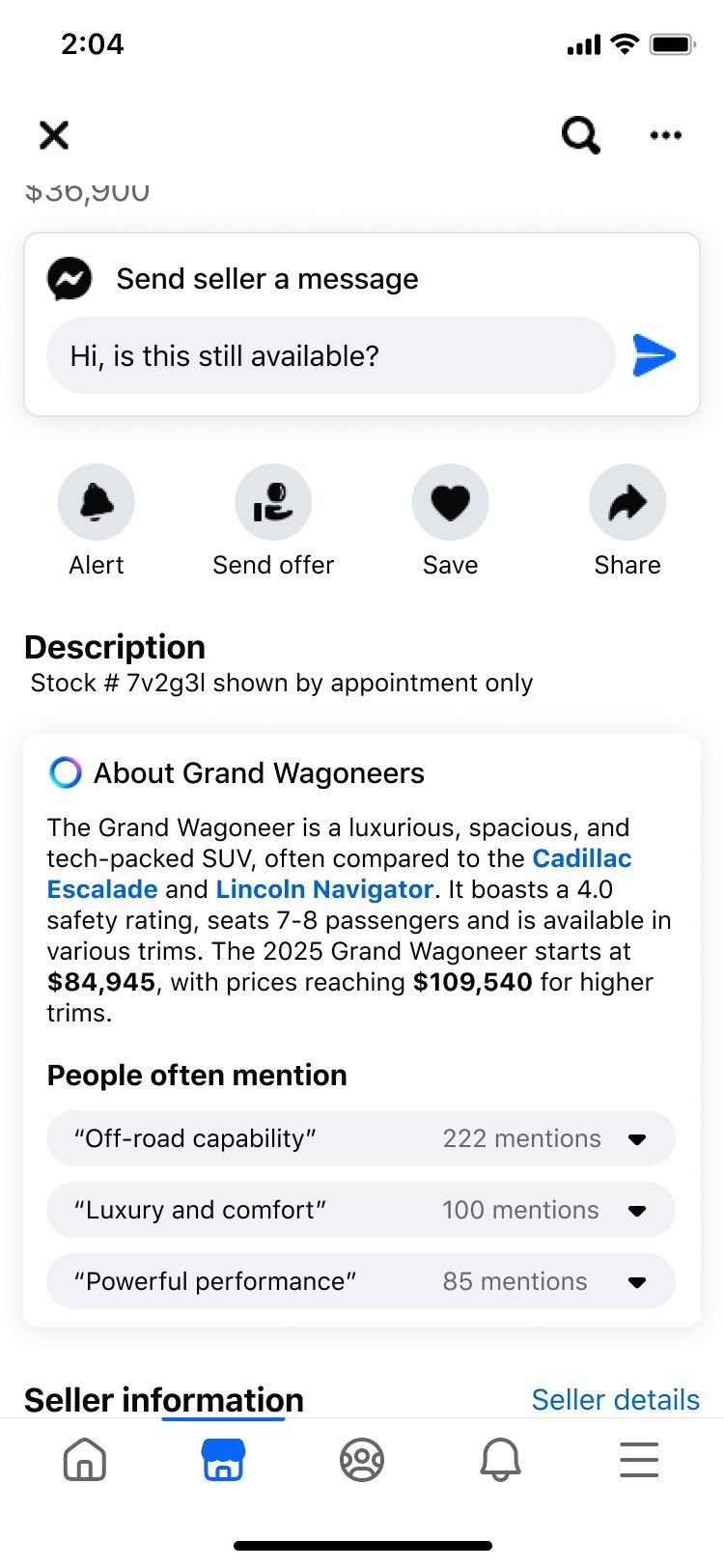
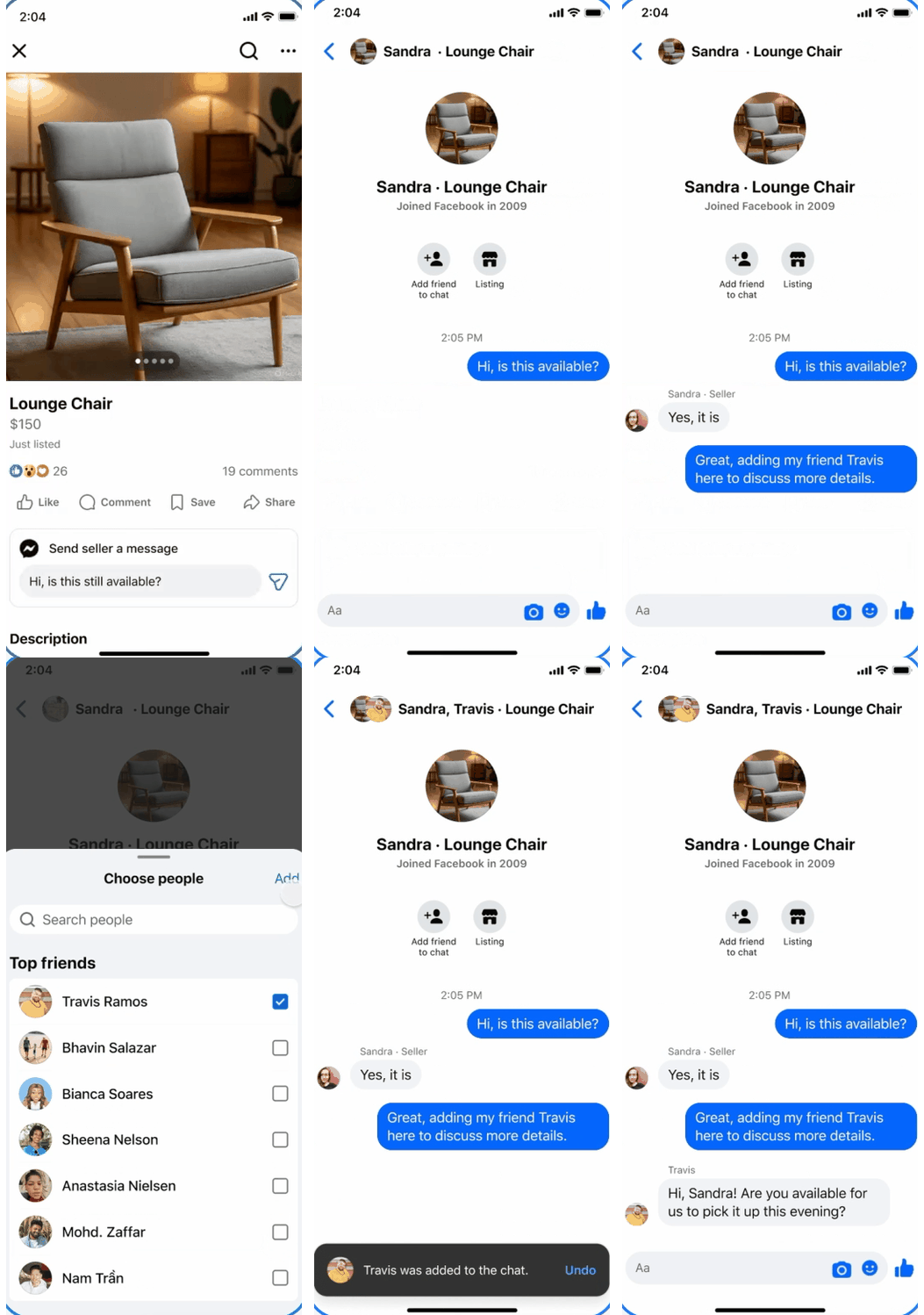
Back to that wagon. A first car is the purchase where a young adult knows the least, so the help lives on the listing itself: AI insights with safety ratings and price context, suggested questions to ask the seller, what owners actually mention, and friends brought into the seller chat to decide together. Those answers cut both ways: every question resolved on the listing was one the seller never had to field, which kept low-intent messages off them. Young adults were already screenshotting listings into group chats, so we designed for that behavior directly.

AI vehicle insights on a listing
AI vehicle insights: the homework, done on the listing.
A vehicle listing showing what owners often mention
What owners actually say, aggregated from hundreds of mentions.
Collaborative buying: friends in the seller chat
Collaborative buying: friends in the seller chat, coordinating together.

The social hook

In the feed: shopping the way young adults already shop

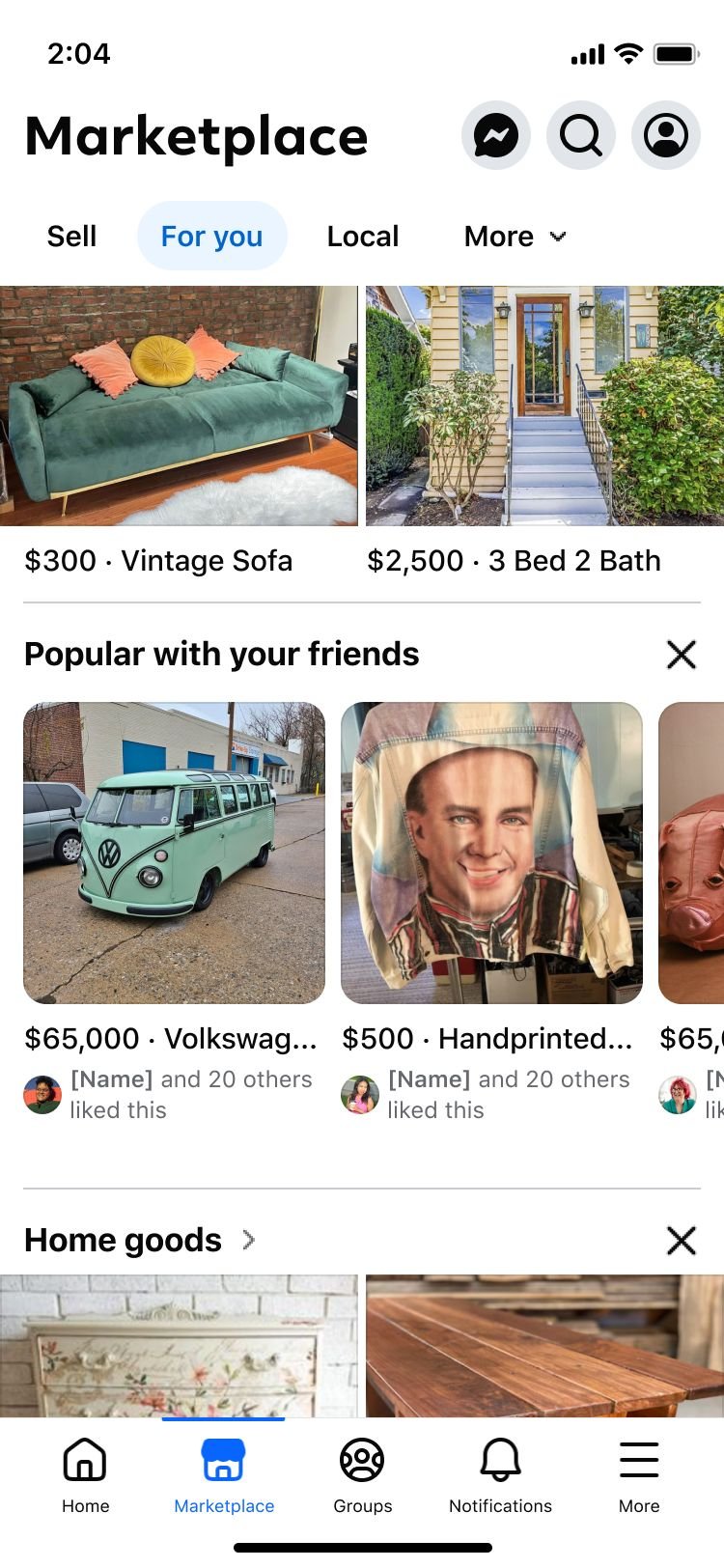
Before the redesign, a like on a listing went nowhere. We wired social signals into the engagement loop: reactions and comments fed ranking and notifications, which brought people back to browse. Collections let friends shop together, shared through Feed and Messenger. Shopping stopped being a solitary search and started building the social graph young adults came to Facebook without.

Marketplace browse showing listings popular with your friends
Popular with your friends: listings your people already reacted to.
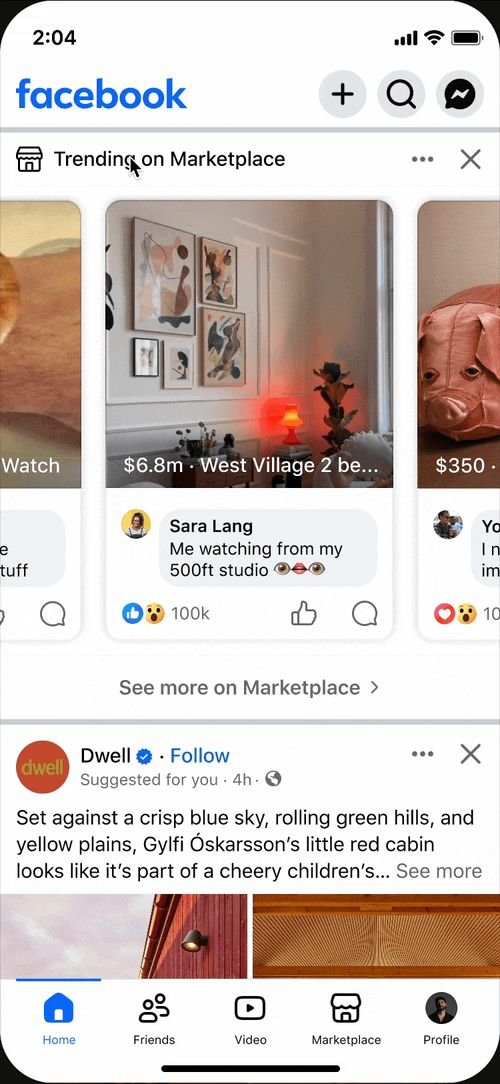
Trending on Marketplace surfacing inside the Facebook feed
Marketplace surfacing in the Facebook feed, where young adults already scroll.
Listing leaderboard of the week's most reacted-to listings
The listing leaderboard: the week's most discussed and reacted-to finds.

The amplification

Across Facebook: the front door opens

The last move: use Marketplace's utility to introduce young adults to parts of the app they had no reason to visit yet. Pathing took what someone was browsing and sent them deeper: a new parent researching strollers to parenting groups, a shopper's interests to Reels, Groups, and local events. Landing it took a cross-product partnership across the navigation, discovery, and young-adult teams. I led it with my product director, and coached an IC designer whose work convinced our VP to fund the effort and won her a promotion.

Utility brought young adults to Marketplace; the rest of Facebook is what kept them there.

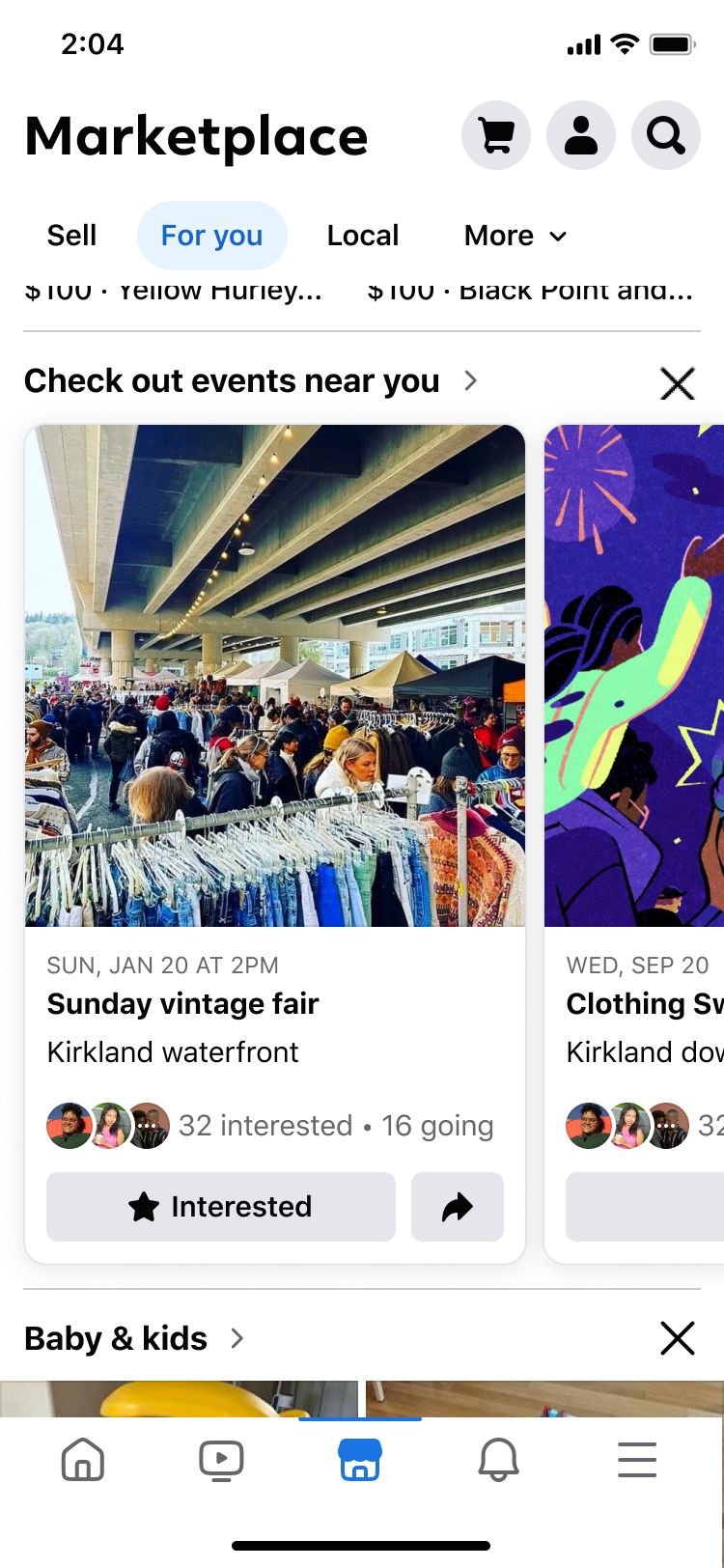
Marketplace surfacing local events near you
To Events
Local events, surfaced right in the browse.
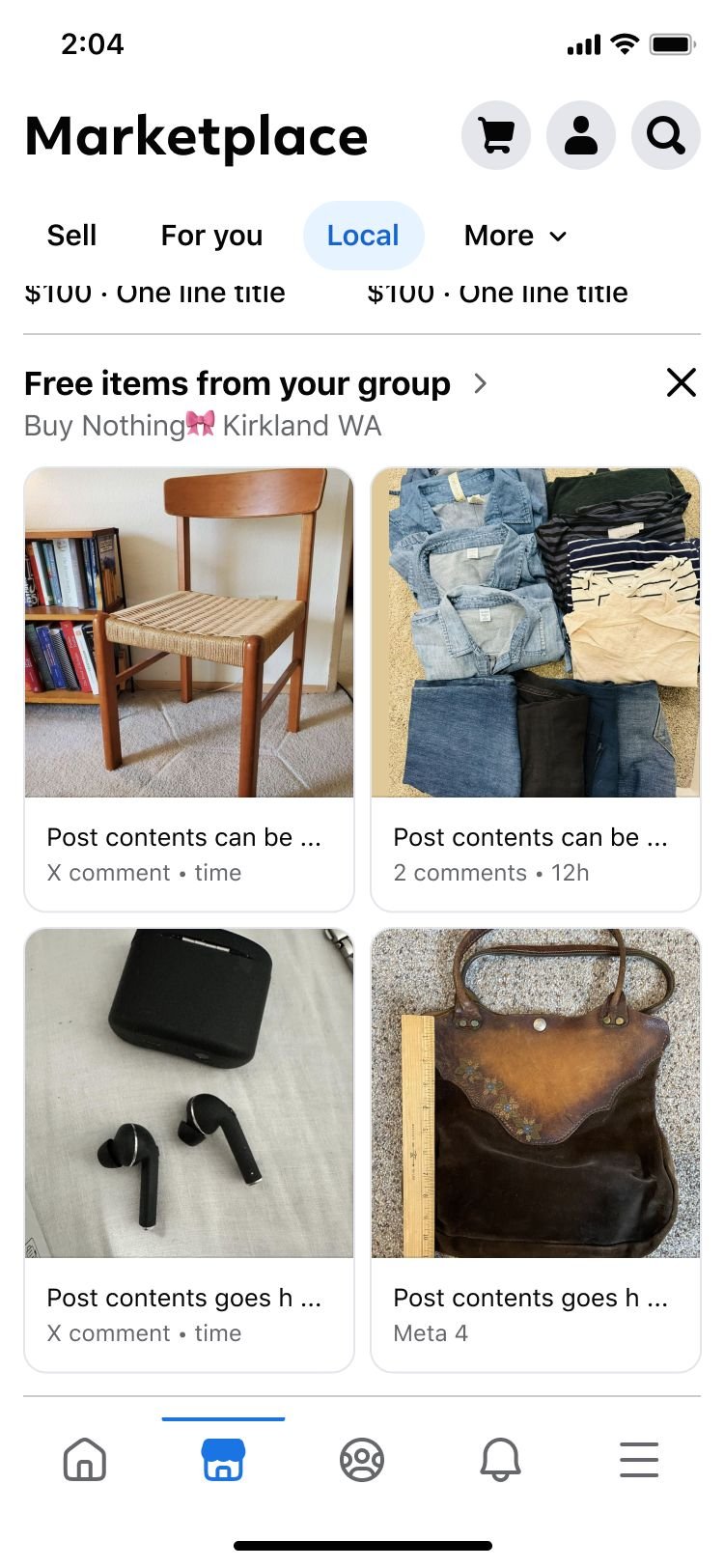
Free items from your groups inside Marketplace
To your Groups
Free items from the groups you are already in.
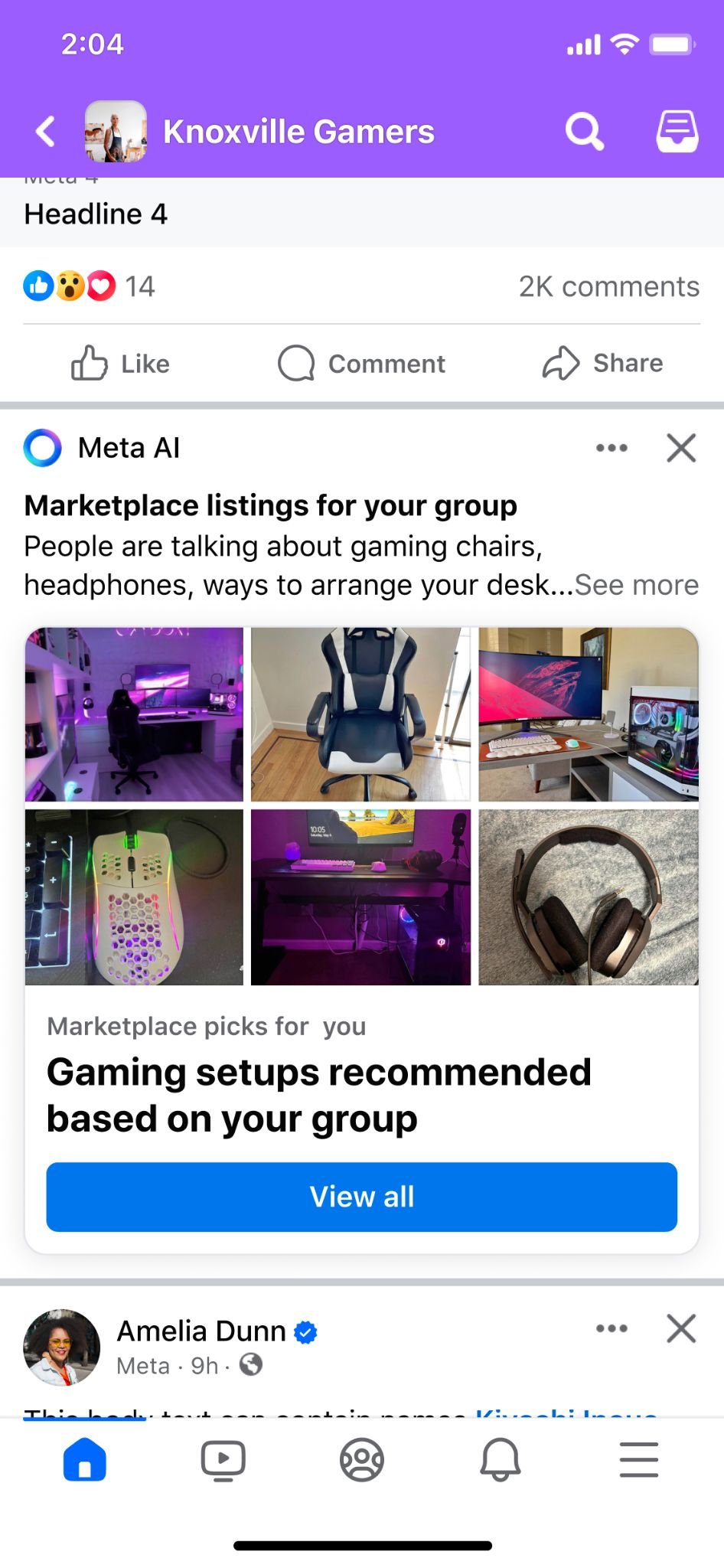
Marketplace gaming listings recommended inside a gaming group
Back to Marketplace
Listings recommended from what a group talks about.

The outcome

From product strategy to company strategy

The redesign shipped publicly as the Marketplace “Glow Up,” documented in Meta's newsroom: the AI shopping features and the social layer, built around young adults. Collections, reactions and comments, collaborative buying, and AI vehicle insights and suggested questions.

It worked. Social adoption came fast, millions of reactions and hundreds of thousands of comments a day, with no hit to the core experience. The young-adult work beat its engagement goal, cleared its growth goals by more than double, and hit every topline goal by May, in the first half of the year.

Beaten
The young-adult engagement goal, ahead of target
2x+
Growth goals beaten, more than double target
By May
Every topline goal cleared, in the first half

Beyond the goal

Expanding into new verticals

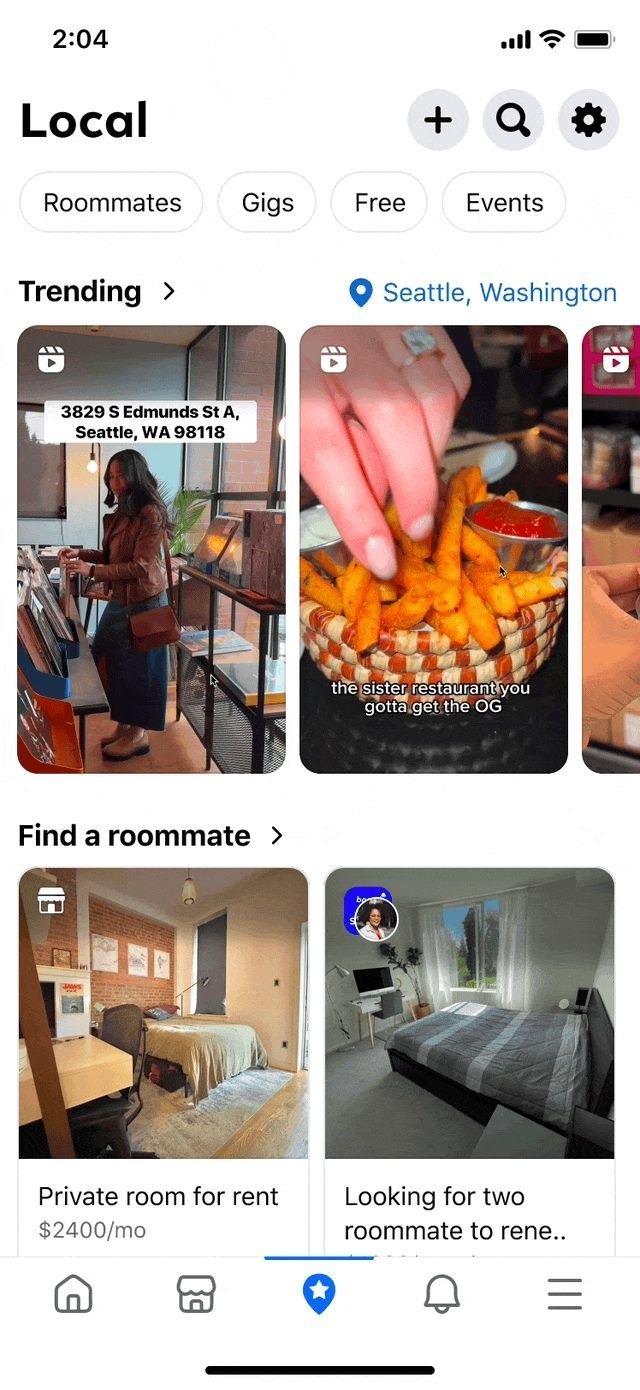
The young-adult win proved the base product could carry more than shopping. Marketplace’s local listings were a foundation to test new verticals on: entry-level jobs and local places each launched as an MVP inside Marketplace, and both worked well enough to grow into their own teams.

All work